Beer Can Sizes and Dimensions: 12 oz, 16 oz and 24 oz Guide
Views: 0 Author: Site Editor Publish Time: 2026-10-09 Origin: Site
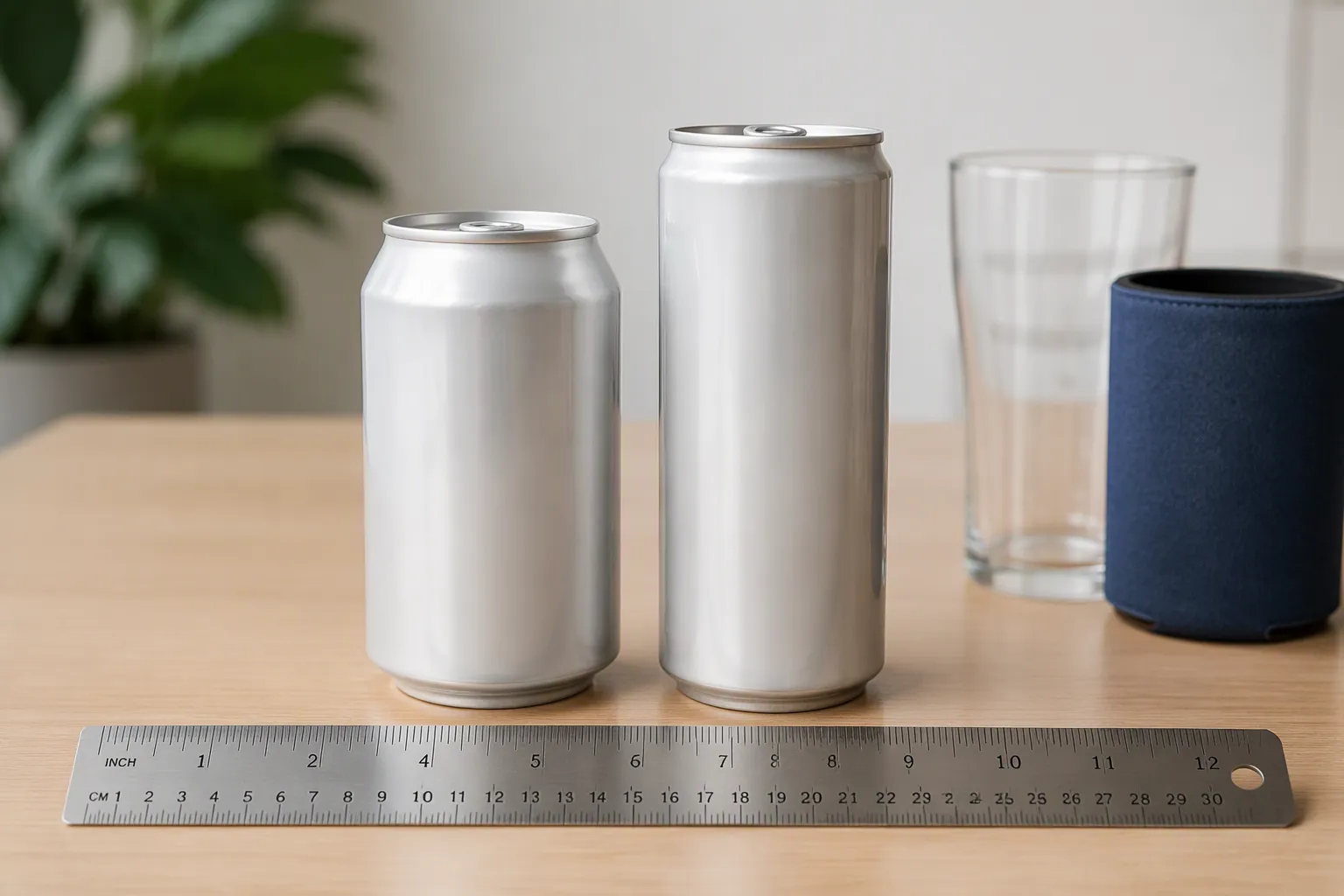
A standard 12 oz beer can stands about 4.8 inches (122 mm) tall with a 2.6-inch (66 mm) diameter. A 16 oz can reaches roughly 6.2 inches (157 mm) at the same width. A 24 oz can exceeds 6 inches (152 mm) while keeping that 2.6-inch diameter. These beer can sizes shift with can type—standard, sleek, or slim. That variation always affects storage, transport, and your selection. Focus on dimensions, uses, and packaging for beer applications only, while our broader beverage can article covers all drink containers. Which beer can size and type really best fits your needs?
Key Takeaways
A 12 oz beer can is about 4.8 inches tall and 2.6 inches wide. It is the most common size and fits most cup holders.
A 16 oz beer can is called a tallboy. It holds a full pint and stands 5 to 6 inches tall.
A 24 oz beer can is over 6 inches tall. It gives you two servings in one can and is great for sharing.
Beer cans come in different types: standard, sleek, and slim. Each type changes the can's shape and label space.
Choose a can size based on your occasion. Use 12 oz for solo drinking, 16 oz for a full pint, and 24 oz for parties.
12 oz Beer Can Size and Dimensions
Capacity and Measurements of the 12oz Beer Can
The 12-ounce can is the workhorse of the American beer market. Its capacity is 12 oz / 355 ml, and that figure holds steady across nearly every brand on the shelf. The 12 fl oz pour fits a standard glass, a koozie, and most cup holders without fuss. This size also serves as the global standard, so you can find it in supermarkets, bars, and restaurants worldwide.
Specification
Imperial
Metric
Volume
12 oz
355 ml
Diameter
211
66 mm
Height
413
122.22 mm
The physical specs stay just as consistent. A standard can measures about 4.8 inches (122 mm) tall with a 2.6-inch (66 mm) diameter. In the can industry, that diameter carries the code 211, and the height code is 413. A sleek version of the same volume can stretches taller and narrower, so it feels different in your hand even though it holds the same amount. Sleek cans often use a 202/204 profile. If you compare beer can dimensions across types, the diameter often stays fixed while the height changes.
Label space matters when you plan artwork. A standard 12 oz can takes a label roughly 3.625 to 4 inches tall and 7.5 to 8 inches wide. The printable area runs about 7.6 inches wide by 4.13 inches tall. A sleek can offers a narrower wrap, about 7.13 inches wide by 4.55 inches tall. You can apply these as pressure-sensitive labels, shrink sleeves, or direct printed cans. Full-color waterproof labels for sleek cans come die-cut at 5.31 by 7.00 inches with 0.015-inch radius corners and a 3/16-inch gap when wrapped. These numbers help you size artwork before you commit to a print run.
Common Uses and Pack Sizes
The 12oz beer can serves the widest range of drinking occasions. You grab one with lunch, enjoy a cold one after mowing the lawn, or share a few flavors with friends. Lagers, ales, and pale ales all ship in this format, and it remains the top choice for export to North America. The format needs no introduction, so new drinkers reach for it without hesitation. A 15-pack or 18-pack bridges the gap between a casual six and a full case.
Pack sizes give you real flexibility. Standard 12-ounce cans come in 6-packs, 12-packs, 15-packs, 18-packs, 24-packs, and 30-packs. The 6-pack is the classic retail unit. The 12-pack suits family gatherings, and the 24-pack case weighs about 20 pounds (9 kg). Warehouse clubs favor the 30-pack for mass-market brands. A 24-pack works well for wholesale and bulk purchase. An 8-pack or 10-pack often carries craft or variety selections. Smaller formats like 8 oz and 10 oz usually appear in 4- to 8-packs, while 16 oz cans lean toward 4- to 6-packs.
This size also wins on compatibility. Filling lines handle it easily, and consumers recognize it without any education. The trade-off is competition — differentiation depends on your brand, taste, and design. This can remains the most flexible option across every channel, from convenience stores to large warehouse clubs. You can also pair it with a 16 oz or 24 oz line to cover more shelf space.
16 oz Beer Can Size and Dimensions
Capacity and Measurements of the Pint Can
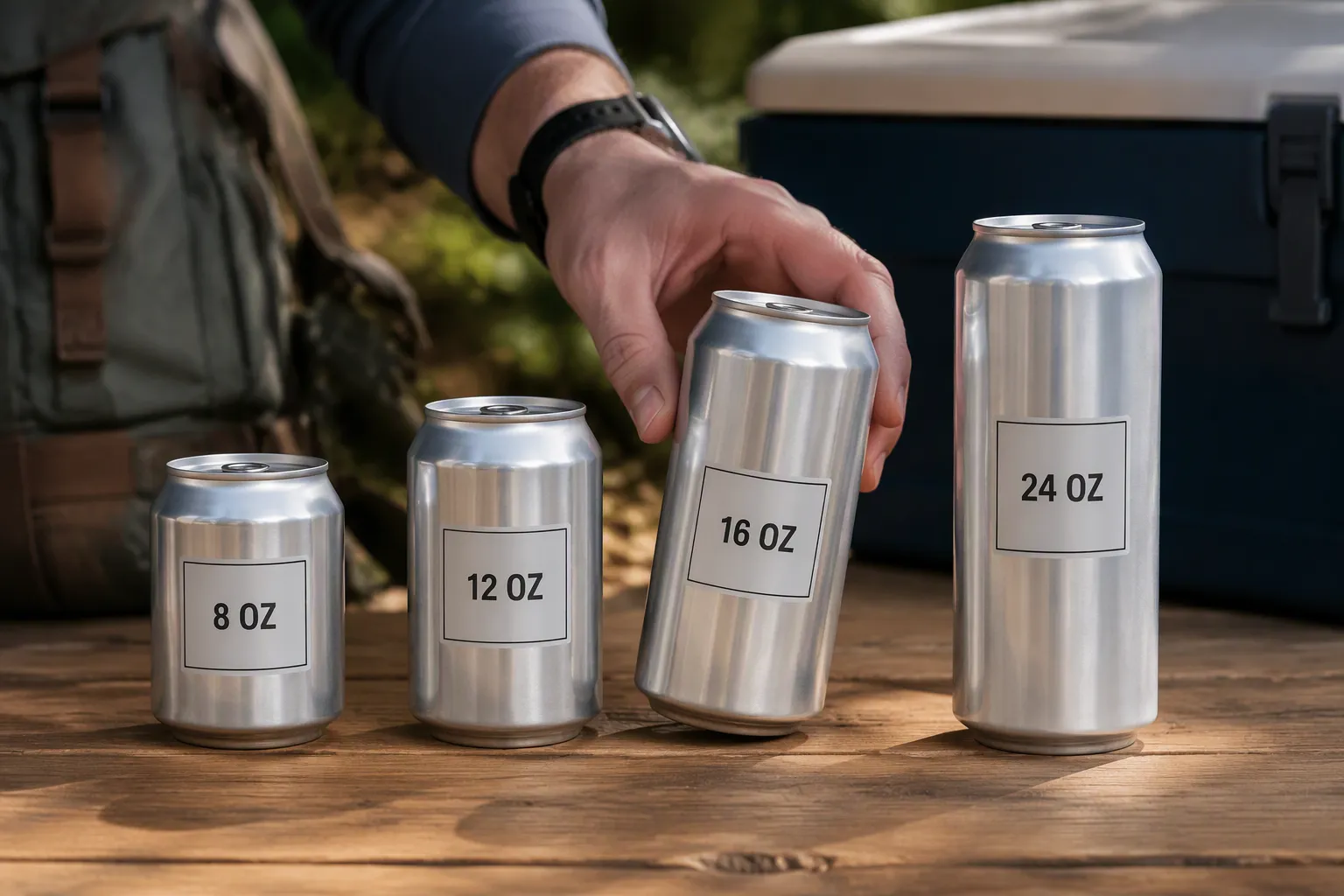
The 16 oz beer can holds 473 milliliters, and drinkers in American markets often call it a tallboy or a pounder. This 16-ounce can sits between the standard 12 oz and the larger 24 oz format. Its dimensions vary a little by manufacturer, so check the spec sheet before you design artwork.
Attribute
Value
Volume
473 ml (16 oz)
Height
6.19–6.2 in (approx. 157 mm)
Diameter
2.13–2.6 in (approx. 66 mm)
Empty weight
Approximately 0.5 oz
Common name
Tallboy
You can see the range clearly. One common build measures 6.19 inches tall with a 2.13-inch diameter. Another measures about 6.2 inches tall with a 2.6-inch diameter. That second profile matches the 211 diameter body. The extra height gives you more printable area than a 12 oz can, so your branding and artwork gain room to breathe.
Common Uses and Pack Sizes
Craft brewers drive much of the growth in this 16-ounce size. A taller can stands out on a crowded shelf, and it signals a fuller-bodied or higher-ABV beer. The format works well as a single-serve pour, so many breweries skip multi-packs and sell these cans one at a time. You get a full pint in one container without the bulk of a larger can.
Retailers still group them. You will find 16 oz cans in 4-packs, 6-packs, and 12-packs, though single cans dominate craft coolers. Compare this 16-ounce tallboy against a 12 oz can, and the trade-offs become clear. You carry more liquid per unit, and you gain shelf presence. You also add height, so measure your cooler and shelf clearance first. For a deeper look at how this format fits the wider range, see our guide to beer can size.
24 oz Beer Can Size and Dimensions
Capacity and Measurements of the Tall Boy
The 24 oz beer can holds 710 milliliters. Drinkers sometimes call this format a silo or a tallerboy. It delivers the largest single-serving pour in the standard lineup. The 24-ounce can gives you roughly two 12 oz pours in one container.
Its dimensions follow the same family pattern as smaller cans. The body runs over 6 inches (152 mm) tall, and the diameter stays near 2.6 inches (66 mm). That width matches the 211 body used by the 12 oz and 16 oz formats. The extra height, not the width, creates the added volume.
Attribute
Value
Volume
710 ml (24 oz)
Height
Over 6 in (152 mm)
Diameter
Approx. 2.6 in (66 mm)
Common names
Silo, tallerboy
Label space grows with the taller body. You gain more vertical room for artwork than a 12 oz can offers. The wrap stays close to the same width, so your design stretches upward. Plan your print area around that taller profile before you finalize artwork.
Common Uses and Pack Sizes
This format suits high-volume single servings. One can fills a large glass or a full pint plus a top-off. Tailgates, camping trips, and long outdoor events favor it. You carry fewer cans for the same total liquid. That saves cooler space and cuts trips back to the car.
Retailers usually sell these cans in 4-packs, 6-packs, or as singles. You rarely see them in 24-packs or 30-packs. The weight per unit runs high, so bulk cases get heavy fast. Compare this size against a 12 oz beer can when you plan a party. The larger can wins on convenience, and the smaller one wins on variety.
Comparing Beer Can Sizes: Standard, Sleek, and Slim
Standard and Sleek Can Types
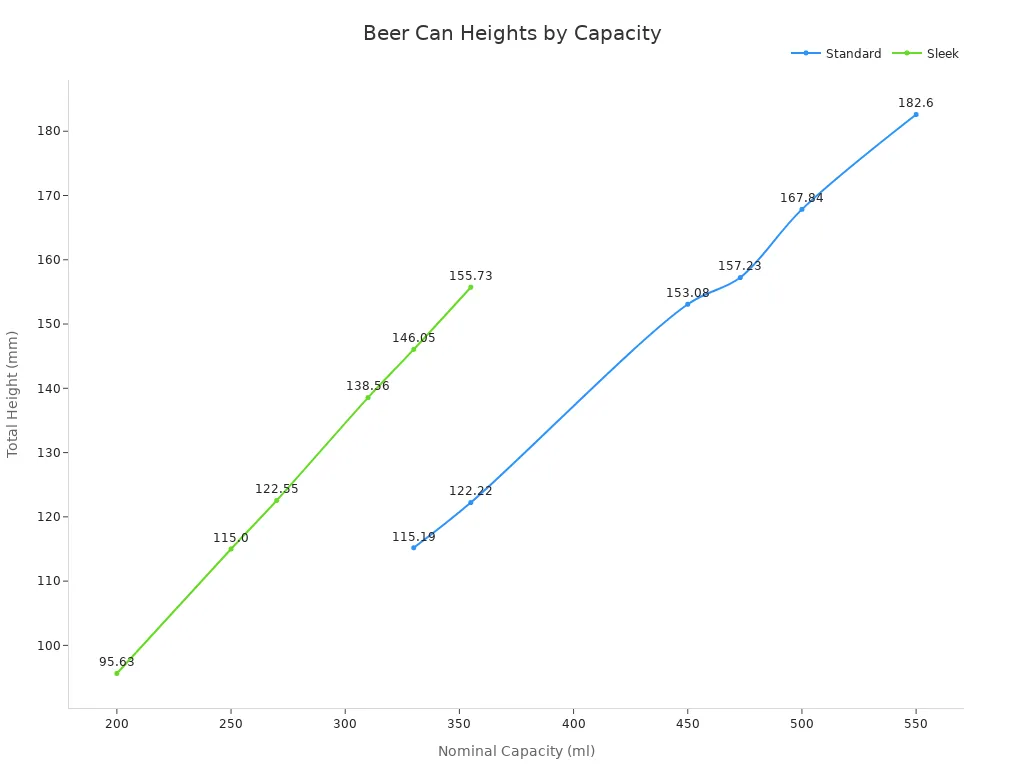
The standard can remains the default for beer and carbonated soft drinks. Its 66 mm body diameter gives you the best stability for stacking and pasteurization. Standard formats cover 330 ml, 355 ml (12 oz), 450 ml, 473 ml (16 oz), 500 ml, and 550 ml. Every one of these uses a 202 easy-open end and holds pressure up to 90 PSI (6.2 bar). A 330 ml standard can stands about 115 mm tall. A 500 ml version reaches roughly 168 mm. The standard beer can size works across filling lines worldwide.
Sleek cans take a different path. They use a narrower 57.4 mm body and stretch taller for the same volume. A 330 ml sleek can measures about 146 mm tall, while the standard version sits at 115 mm. That extra height changes your pallet patterns and seamer chucks. Sleek profiles fit more facings per shelf meter and signal a premium product. You see them with hard seltzers, iced coffee, and energy drinks. Common volumes include 200 ml, 250 ml, 270 ml, 310 ml, 330 ml, and 355 ml.
Slim and Compact Can Types
Slim cans push the narrow profile further. Their body diameter measures 53.4 mm (2.10 in), and they take a smaller 200 end at 50.0 mm. A 250 ml slim can stands 133.9 mm tall and weighs about 9.66 g. Compare that to a sleek 250 ml can at 115 mm tall and 10.00 g. The slim shape feels compact and elegant in your hand. Energy drinks, ready-to-drink coffees, and wines favor this format.
Compact formats also include the 8oz beer can and the 10oz beer can. These smaller sizes suit trial packs, sampler flights, and low-volume pours. You can find 8oz, 10oz, 12oz, and 16oz beer cans across craft and specialty lines. The dimensions of each format shift with the can type, so always check the spec sheet before you design artwork.
Shandong Jinzhou Health Industry Co., Ltd. supplies all three types. They offer standard, sleek, and slim aluminum beer cans with custom printing, matte or tactile finishes, MOQ from 100,000 units, FDA and EU REACH compliance, and OEM/wholesale services.
Can and Bottle Sizes: Aluminum vs. Glass
Light Protection and Freshness
Light hurts beer. It breaks down hop compounds and makes that skunky smell people notice fast. The package you pick controls how much light gets to the liquid inside.
Aluminum cans block all light, so they stop skunking for good. That makes cans a smart choice for keeping beer fresh. Glass acts in different ways based on its color. Clear glass blocks almost no UV light and can cause bad flavors. Amber glass blocks light very well and greatly lowers light damage. Green glass lands in the middle with only some protection.
Packaging
Light Protection
Effect on Beer
Clear glass
Minimal UV protection
Can cause off-flavors
Amber glass
Excellent light protection
Strongly reduces light damage
Green glass
Moderate protection
Partial protection only
Aluminum cans
Complete light barrier
Prevents lightstruck flavors and preserves hop aromatics, color stability, and flavor integrity
A lining inside each can stops the metal from touching your drink. Taste stays the same unless that lining breaks. This design keeps hop aromatics, color stability, and flavor integrity safe from the filling line to your glass.
Weight, Portability, and Recyclability
Weight decides how far your beer goes and how much fuel that trip uses. An aluminum can weighs about 15 grams. A glass bottle weighs 350 to 500 grams, so it is 20 to 30 times heavier. That gap changes everything about shipping.
Lighter cans get cold faster and travel better. Glass bottles add weight, so shipping them burns more fuel and makes more emissions. The lifecycle carbon footprint per liter for aluminum runs 45 to 55 percent lower than glass. If you drag a cooler to a campsite or a tailgate, cans also hold up to drops while glass breaks easily.
Recycling shows a like story. Aluminum can be recycled forever with no loss in quality, and recycling it saves up to 95 percent of the energy needed for new aluminum. Cans hold 73 percent recycled content, and the US recycling rate hits 43 percent while Europe reaches 76 percent. Glass can be recycled too, but melting it takes far more energy. Glass holds 23 percent recycled content and a 39.6 percent US recycling rate. When you compare common beer can and bottle sizes for a new brand, these numbers matter as much as the dimensions themselves.
Multi-Pack Formats and Storage
Common Multi-Pack Configurations
Pack sizes change with can volume, and that pattern shapes how you buy, stack, and sell beer. The 12 oz format gives you the most retail choices. You can find a 12-ounce can sold in 6, 12, 18, 24, or 30 packs. That range covers a quick store run and a full party trip. A 16 oz can usually comes in 4 packs. The 24 oz size usually sells as a single unit, so you grab one tall can instead of a wrapped bundle.
These groupings affect shelf and bar planning. A 30-pack case takes more floor space than a 4-pack, so retail displays need different footprints. Bars often keep singles and 4-packs behind the counter. The dimensions of each multi-pack decide cooler fit, so measure your shelf height and depth before you order in bulk.
Packaging Dimensions and Storage Tips
Good storage protects flavor and prevents damage. Follow these practices for multi-pack beer cans:
Use protective packaging such as padding or inserts inside the shipping box to keep cans steady and stop them from shifting during transit.
Pick a carrier that knows how to handle beverage shipments, since not all shipping services are set up for beer.
Store and transport beer at the right temperature, as most craft beers need specific storage conditions to keep their quality.
Retail packaging adds another layer. Shelf-ready trays and display cases help a 12-ounce can stand out, while bar coolers favor compact 4-packs. When you compare can and bottle sizes for shipping, remember that multi-pack weight climbs fast with larger counts. Plan your transport around total case weight, not just single-can dimensions. A little forethought here keeps every can fresh from the warehouse to the cooler.
Beer Can Size Guide: Choosing the Right Size
Occasion and Serving Size
You pick a can size based on what you plan to do. A 12 oz can gives you a standard serving. A 16 oz tallboy pours a full pint. A 24 oz silo works for sharing or high-volume drinking. Match the format to the moment, and you waste less beer and enjoy more of it.
Occasion
Recommended Can Size
Why It Works
Parties and gatherings
24 oz silo, 32 oz crowler, tallboys, standard cans, ponies, stubbies
Larger cans suit sharing; mixing sizes lets guests try different flavors without committing to a full pint
Solo sipping
12 oz standard can, 16 oz tallboy, stovepipe
Just enough for one person; you can finish it before it gets warm; a stovepipe offers more than a pint without being too much
Travel and outdoor fun
8 oz pony, smaller cans
Fits easily in coolers and bags; chills fast; easy to carry; cans are less breakable and easier to recycle than bottles
Tasting and sampling
Ponies, 330 ml Euro cans, tasting packs
Small sizes let you sample multiple styles without filling up; ideal for exploring new flavors
For parties, the 24 oz or 32 oz beer cans are ideal for sharing, providing more beer per serving.
Think about your plans before you buy. The right beer can size makes your event more fun and less wasteful. Lagers and pilsners suit 12 oz cans because you drink them cold and fresh. IPAs and pale ales work well in 16 oz tallboys since the extra volume matches a full pint pour. Stouts and porters often appear in 12 oz cans because they carry richer flavor in smaller doses. If you launch a new beer brand, start with a 12 oz standard can for your flagship. Add a 16 oz option for your hoppy or high-ABV releases. This beer can size guide helps you match capacity to drinking style.
Storage, Transport, and Cost
Storage space, transport weight, and cost per ounce all shift with can size. A 24-pack of 12 oz cans weighs about 20 pounds (9 kg). Larger cans add height, so measure your shelf and cooler clearance first. A 16 oz can reaches about 6.2 inches tall, and a 24 oz can exceeds 6 inches. These dimensions affect how many units fit on a pallet and in a retail cooler.
Cost per ounce usually drops as can size grows. You pay less per fluid ounce for a 24 oz can than for a 12 oz can. That math favors high-volume buyers. Transport weight climbs with larger formats, so shipping costs rise per case. A 12-ounce can remains the lightest option per unit. When you compare can and bottle sizes, aluminum wins on weight and recyclability. Cans weigh far less than glass and block all light.
Dimensions vary slightly by brand and design. A sleek can stretches taller and narrower than a standard can at the same volume. Always check the spec sheet before you order packaging or design artwork. For a new beer brand, choosing the right beer can size means balancing your target occasion, your storage limits, and your price point. Start with one or two formats, test them in your market, and expand your lineup as demand grows. The right beer can size for your brand depends on your drinker, your channel, and your budget.
You now know the core numbers. A 12 oz can measures about 4.8 inches tall and 2.6 inches wide. A 16 oz can reaches about 6.2 inches at the same width. A 24 oz can passes 6 inches. Can type changes the feel. Standard, sleek, and slim bodies alter grip, shelf fit, and label space. The end style also shapes each sip. Match beer can sizes to your moment. Pick a 12 oz can for solo drinking, a tallboy for a full pint, or a silo for sharing. Formats keep growing, so stay curious and check specs before you buy.
FAQ
What is the difference between a standard, sleek, and slim beer can?
A standard can uses a 66 mm diameter body. A sleek can narrows to 57.4 mm and stretches taller for the same volume. A slim can measures 53.4 mm wide and suits compact formats like 250 ml. Each type changes grip, shelf fit, and label space.
How do I convert beer can ounces to milliliters?
One fluid ounce equals approximately 29.57 milliliters. Multiply the ounce figure by 29.57 to get milliliters. A 12 oz can holds 355 ml. A 16 oz can holds 473 ml. A 24 oz can holds 710 ml.
Which beer styles work best in each can size?
Lagers and pilsners suit 12 oz cans for cold, fresh drinking. IPAs and pale ales fit 16 oz tallboys for a full pint pour. Stouts and porters often appear in 12 oz cans. A 24 oz silo works for sharing or high-volume sessions.
What packaging options exist beyond standard cans?
You can find beer can sizes beyond the standard lineup. A 32-ounce can, also called a crowler, suits sharing at events. A 64-ounce container, or growler, serves groups at breweries. These formats let you take fresh draft beer home.
How do I choose the right can size for a new beer brand?
Start with a 12 oz standard can for your flagship. Add a 16 oz option for hoppy or high-ABV releases. Consider your target occasion, storage limits, and price point. Test one or two formats in your market before expanding.