Custom Energy Drink Cans: Packaging and Printing Guide
Views: 0 Author: Site Editor Publish Time: 2026-10-14 Origin: Site
You have a clear choice when you start a custom energy drink. Pick the right can size, printing method, and rules to follow. This step saves you from costly packaging problems later. A wrong choice on any one of these can stop your whole product launch.
Your energy drink can packaging must match on four fronts. Can shape, lining, decoration, and production all work together. This match protects product safety and brand shelf appeal. As you source custom energy drink cans, treat these choices as connected, not separate. The energy drink can packaging guide below helps you move forward with confidence.
Key Takeaways
Choose the right can size for your energy drink. Match it to your caffeine dose and where you sell it.
Pick a printing method based on your order volume. Offset printing works for large orders. Digital printing is flexible for small batches.
Test liner compatibility with your formula. A bad liner can cause leaks and bad taste.
Include all details in your RFQ. State can size, liner, print method, and market. This prevents costly changes.
Plan your timeline carefully. Production takes 25-35 days. Shipping adds 15-30 days. Build in extra time for delays.
Energy Drink Can Sizes And Their Impact
Volume, Caffeine Dose, And Use Occasion
The size of energy drink can you pick changes how people use your product. Common sizes are 8.4 oz, 11.2 oz, and 16.9 oz. Each size gives a different amount of caffeine and fits a certain drinking time.
An 8 oz serving has about 85 mg of caffeine. A 16 oz can has around 170 mg. Energy shots pack about 200 mg into only 2 oz. Most energy drink cans have 80–150 mg of caffeine per 8 ounces. That is about the same as 5 ounces of coffee or two 12-ounce sodas.
The 250ml slim can works well for premium, health-focused buyers. It gives 80–120 mg of caffeine. This size draws in consumers who want natural, functional drinks. A 330ml can gives 100–150 mg and fits everyday supermarket shoppers. The 500ml tallboy gives 150–300 mg and appeals to athletes and gamers.
Cost, Branding, And Shelf Presence
Production cost changes by size. The 330ml can is the baseline and the most cost-efficient choice. It makes up about 45% of global beverage can production. The 250ml slim can costs 15–20% more to produce. The 500ml size costs 10–15% more than the 330ml.
Dimension
250ml (8.4oz)
330ml (11.2oz)
500ml (16.9oz)
Production Cost
+15–20% vs 330ml
Baseline
+10–15% vs 330ml
Brand Positioning
Premium / functional
Standard / value-health
Performance / value
Dominant Market
Europe, APAC
EU, APAC, global
US, Sports/C-store
Best Channel
Premium on-trade, health
Supermarket, value
C-store, sports
Caffeine Range
80–120mg
100–150mg
150–300mg
The 250ml slim can has a tall, slim shape with a 53mm diameter. This shape gives strong shelf presence. It makes your brand stand out from standard soda and beer cans. The 500ml can uses the same 66mm diameter as the 330ml. You only need to adjust height, not change the diameter.
Larger cans raise fill weight and shipping cost. They also boost perceived value. Smaller cans work well for trial runs and gym channels. Shandong Jinzhou Health Industry Co., Ltd offers food-grade, fully recyclable aluminum cans. These energy drink aluminum cans give excellent taste protection, faster cooling, and portability.
When you source custom energy drink cans, match the can size to your caffeine dose and channel strategy. A canned energy drink in the wrong format can miss its target buyer entirely. The right energy drink can size turns packaging into a branding tool.
Offset printing is the traditional workhorse. Ink moves from a plate to a rubber blanket and then onto the can. This method uses the Pantone Color Matching System or spot colors. It gives bright, long-lasting graphics with a classic look. James Bullington of LSINC Corporation says traditional decorators apply spot colors at many stations. They can run up to 2,200 cans per minute. They work best with few changeovers and high volumes. Philip Chu of Roland DGA adds that this process is fast. But it needs a lot of space, equipment, and money to run.
Shrink sleeve labels are a flexible option. A printed plastic sleeve shrinks onto the can with heat. Paul Edwards of INX International says this covers the whole can. That creates a higher quality look. Keep important text away from the edges. Small distortions show up at the shoulder. Pressure-sensitive labels work for small batches and test runs. They need no new tooling, just a revised print file. Digital printing, or digital aluminum can printing, puts your design right on the can. Mike Pecorini of Koenig & Bauer Kammann US explains it allows quick design changes, customization, and less waste.
Finishes matter for shelf appeal. You can pick glossy, matte, frosted, tactile, metallic, or fluorescent surfaces. Fluorescent finishes work well for energy and youth brands. Shandong Jinzhou supports aluminum can and carton printing as part of its one-stop OEM service.
Volume, Flexibility, And Cost Trade-Offs
Your order volume decides which method pays off. Offset lithography becomes economical at high volumes. Typical minimum order quantities start at one 40-foot HQ container per design. Artwork changes need new cylinder engraving. That limits quick versioning.
Digital printing flips this logic. It is most economical for runs of tens of thousands or fewer. At those levels, plate-making and setup costs of analog methods become too high. At very large volumes, traditional lithography stays cheaper per can.
Labels usually give a lower decoration cost. That can improve profit margin. Digital printing offers more advanced graphics and better durability against condensation and frequent handling. Flexographic pre-printed labels carry plate costs of $200–$800 or more per color per SKU. Minimums are 5,000–25,000 labels per run. Digital inkjet has no plate cost and no minimum. A new artwork file prints the same day.
For most ready-to-drink brands making seasonal releases, regional SKUs, or limited batches, digital pressure-sensitive label printing is the most flexible format. No plates, no minimum order quantities, and label revisions that go from file change to production the same day. This energy drink can packaging guide treats the trade-off as a volume question. Ask your supplier for a detailed cost-per-can breakdown for your exact volume and design-change frequency.
Formula, Liner, And Label Compliance
Liner Compatibility And Product Safety
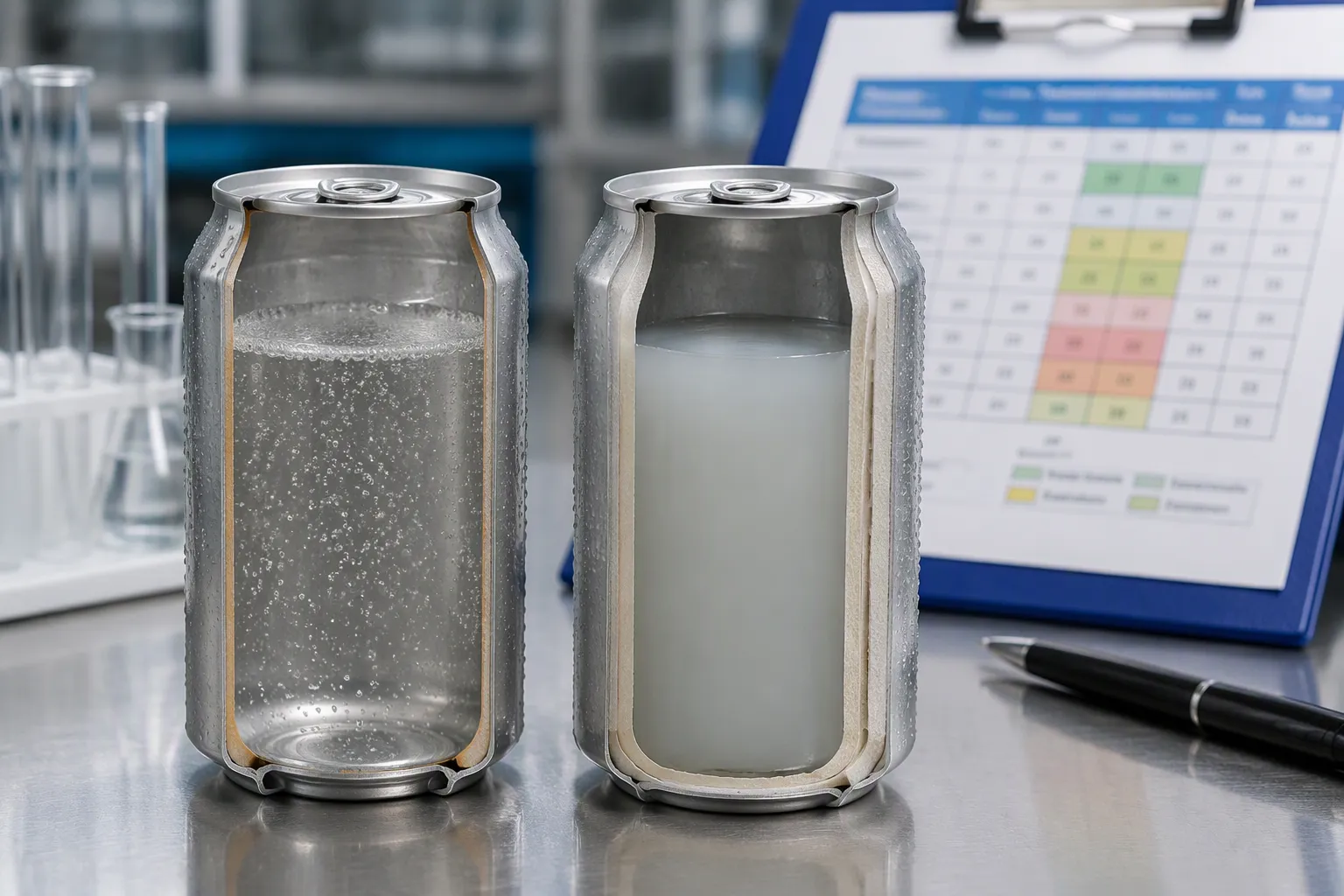
Your drink never touches bare aluminum. It touches a tiny polymer coating sprayed inside each can. This lining's chemical compatibility decides if your drink stays safe or slowly eats through the metal. Standard liners work for carbonated soft drinks, beer, sports drinks, and most energy drinks. They have trouble with very high acidity, heavy chloride loads, and harsh sanitizing residues.
The best question for a buyer is not whether aluminum cans are healthy. It is whether the drink is chemically normal or harsh for the chosen liner. If your formula is acidic, alcoholic, functional, or will sit in warm storage for months, ask for liner suitability proof before you approve artwork.
Electrolyte-heavy formulas are a real threat. Traditional can linings cannot hold back high amounts of salts and chlorides. A can called the aTulc holds corrosive liquids without leaking. High-acid juices with a pH below 3.0 also break down polymer barriers. When the liner fails, flavor scalping makes the drink taste flat. The acid then reaches the raw aluminum and causes pinhole corrosion leaks.
Can Type
Liner Material
Compatible Ingredients
Limitations
Standard aluminum can
Internal polymer liner (BPA-NI)
Carbonated soft drinks, beer, sports drinks, energy drinks
Very high acidity, high chloride loads, very high ABV
Beer can lids and soda lids often use the same 202 SOT format. Their internal liners differ based on how corrosive and acidic the liquid is. This means liner choice must match the formula's chemical profile even when can end sizes are the same. Checking formula compatibility before filling is cheaper than finding out after production that your can needs a different coating.
Nutrition Facts And Regulatory Labeling
Energy drink labels need careful work with mockups, nutrition facts, and warning statements. In the U.S., the Nutrition Labeling and Education Act requires a Nutrition Facts panel, an ingredient list, and allergen declarations. Caffeine is regulated under 21 CFR 182.1180, which allows up to 0.02% (200 ppm) as Generally Recognized As Safe in cola-type beverages. The FDA advises a daily caffeine limit of 400 mg.
Federal law does not require energy drink labels to state caffeine amounts. The American Beverage Association adopted voluntary labeling commitments in 2014. These include listing caffeine per serving and per container separately from the Nutrition Facts label. Labels must also carry the statement: "Not intended or recommended for children, pregnant or breastfeeding women, or those sensitive to caffeine."
In the European Union, Regulation (EU) No 1169/2011 requires any drink with more than 150 mg caffeine per liter to carry a warning: "High caffeine content. Not recommended for children or pregnant or breast-feeding women." The label must also include the exact caffeine amount per 100 mL. No claims about caffeine or amino acids are currently on the EU positive list. Such claims are therefore not allowed.
Shandong Jinzhou Health Industry Co., Ltd tests formulas for stability, safety, and global regulatory compliance. Their team helps global clients with tested formulas and compliance support. This support covers private label energy drink packaging and custom aluminum cans for many markets.
Sourcing Custom Energy Drink Cans
RFQ Essentials And MOQ Planning
A full energy drink can rfq stops delays and pricey changes. Your energy drink can rfq should confirm the application category first. State whether your product is a beverage or supplement. This sets your compliance path. Specify the alloy, temper, and coating stack based on your fill product and expected shelf life. Document critical tolerances like wall thickness, seaming parameters, and print registration. Request compatibility and migration test reports before you finalize any order.
Minimum order quantities change by print route. Offset printing needs high volumes, often one full container per design. Digital printing and shrink sleeves allow much lower minimums. Match your MOQ to your launch scale and budget.
Lead Times And Supplier Vetting
Plan your timeline from artwork approval to delivery. Bulk production takes 25–35 days after you approve artwork. Ocean freight adds 15–30 days depending on destination.
Production Phase
Lead Time
Bulk production (after artwork approval)
25–35 days
Ocean freight (varies by destination)
15–30 days
Vet your OEM partner with care. Confirm they run automated filling lines and offer custom formula capability. Check for SQF, cGMP, HACCP, and FDA registration. Ask about seam quality control and caffeine labeling compliance. Poor seams cause leakers and spoilage. Wrong caffeine warnings trigger recalls.
Shandong Jinzhou Health Industry Co., Ltd offers private label energy drink packaging, custom aluminum cans, and worldwide logistics. Their one-stop service covers formula development through delivery. You can review their OEM capabilities through their teams.
WhatsApp:+8617861004208
Skype:+86 17861004208
Phone:+86-15589939275
E-mail:admin@jinzhouhi.com
This sourcing guide helps you select the right energy drink cans, liners, and partners. The right choices protect your brand and help you scale.
Common Ordering Mistakes To Avoid
Misjudging Minimums, Timelines, And Artwork
Many brands ask for a final price before they explain the product type, can format, where it will be sold, and how many they need. A supplier cannot give a helpful quote without those details. Lock in minimum order quantities and payment steps early. Match your forecast to real demand, not wishful thinking. Ordering too much ties up your money and storage space. A careful forecast is safer than chasing the lowest unit cost.
Custom printed energy drink cans usually take longer than plain cans. They need more prep work up front and depend more on approvals before production starts. Restocking is slower, and schedule risk is higher. For urgent launches, build in extra time for printing defects, port delays, or artwork changes. Ask for a production schedule that lists inspection dates, loading dates, and what happens if things run late.
Time is itself part of the cost, especially for new product launches, seasonal sales, and projects with fixed channel windows. When a custom packaging solution slows the project rhythm, the loss is often not just days or weeks but an entire market opportunity.
Artwork files that do not match printer specs cause another common delay. Approving a design or sample without checking local label and import rules leads to rework. Confirm the market, review samples, check label needs, then move into quote and order planning.
Overlooking Liner And Compliance Testing
Skipping liner compatibility tests can cause the inner liner to fail. The protective coating does not hold up, the drink eats through the aluminum, and secondary corrosion causes leaks. Pinhole leakers are tiny holes that are hard to find. Seaming problems weaken the lid-to-can seal. Damage during storage or shipping raises leak risk when the liner is already weakened by pressure and pH changes.
Skipping testing can also void can warranties. Changing liner material or formula often cancels the original warranty. Not meeting BPA-NI lining rules creates regulatory and heavy-metal migration risks in high-acid energy drinks. Leakers drain budgets through recalls, disposal costs, legal fights, and long-term brand damage.
Before you commit, confirm what your supplier can do for custom formulas, sugar-free, low-calorie, and sparkling options. Get lining spec sheets to test pH compatibility with your drink. Run pilot production batches. Put trial batches through simulated warehouse temperature cycling aging tests. This sourcing discipline protects your brand and your budget.
Your custom energy drink cans work best when the can shape, liner choice, printing method, and production plan all match from the start. Picking your energy drink can sizes, printing options, and rules early on shapes your cost, timeline, and brand power. Use the sourcing checklist and supplier vetting steps above to avoid common ordering mistakes. A complete packaging plan, backed by skilled OEM partners like Shandong Jinzhou Health Industry Co., Ltd, helps you launch unique, competitive products in the fast-growing energy drink market.
FAQ
Which can size should you choose for a new energy drink?
Pick the size that fits your caffeine dose and where you sell it. A 250ml slim can works well for premium, health-focused buyers. The 330ml can is a cost-efficient standard choice. The 500ml tallboy suits athletes and gamers. Your energy drink cans should match the occasion, not just sit on the shelf.
How do you pick a printing method for custom printed energy drink cans?
Begin with your order volume. Offset printing makes sense at high volumes with bright, lasting graphics. Digital printing and shrink sleeves let you use lower minimums and change designs fast. Ask your supplier for a cost-per-can breakdown before you commit to energy drink can printing.
Why does liner compatibility matter for energy drink can packaging?
Your formula touches a polymer liner, not bare aluminum. High acidity, heavy electrolytes, and high chloride loads can break that barrier. A failed liner causes bad flavors and pinhole leaks. Test liner compatibility before you approve artwork for your packaging.
What should you include in an RFQ for custom aluminum cans?
State your can size, liner type, lid style, and print method. Add artwork files, target volume, and destination market. Confirm your application category as a beverage or supplement. These details set your compliance path and stop costly changes later.
How long does production and delivery take?
Bulk production takes 25–35 days after artwork approval. Ocean freight adds 15–30 days depending on destination. Build extra time for printing defects, port delays, or artwork revisions. Custom printed energy drink cans need more prep work than plain cans, so plan your launch window early.