How Much Does It Cost to Develop a Custom Energy Drink?
Views: 0 Author: Site Editor Publish Time: 2026-08-03 Origin: Site
If you want to know how much it costs to create a Custom Energy Drink, you should get ready to spend between $100,000 and $300,000. Starting your own energy drink has many initial costs, and you need a solid business plan from the very beginning. The biggest expenses usually include:
Formula development and testing
Packaging design, which can cost from $2,000 to over $50,000
Ingredient sourcing and active ingredients
Manufacturing setup
Marketing and distribution
You need to be aware of these costs because they impact your profit and every business plan you create. The price to launch a Custom Energy Drink company depends on trends, nutrition, and the quality of your functional drinks. If you want to succeed, you must plan every aspect, monitor your finances, and adjust your business plan as your energy brand evolves. Ingredient costs make up a significant portion of your operating expenses, so having a clear strategy helps you spend less and earn more. Stay focused on your business plan and adapt it to new trends, nutritional needs, and active ingredients. A flexible business plan enables you to navigate changes in the energy drink industry and maintain a competitive edge.
Key Takeaways
You will need to spend between $100,000 and $300,000 to start your own energy drink. This money pays for making the formula, designing the package, and telling people about your drink.
There are some big things you will spend money on: making the product, designing the package, setting up how it is made, paying legal fees, and marketing. Each of these things will affect how much you spend.
You might want to make a small amount first to see how your drink does. This helps lower your risk, but it can make each can cost more.
Be ready to change your business plan if you need to. Watch what is popular and change your ideas to stay ahead in the energy drink market.
You should hire people who know about making drinks and following rules. Their help can save you time and stop you from making expensive mistakes.
Custom Energy Drink Cost Overview
Total Cost Range
When you start planning your custom energy drink, you need to know the total cost from idea to launch. Most people spend between $100,000 and $300,000 to get their drink on the market. This range covers everything from the first recipe to the first can on the shelf. If you want to make a small batch, you might spend less, but the cost per can goes up. For small-scale projects, you could pay $2.72 to $3.42 for each can. If you go big, the cost per can drops, but your total budget will be higher.
Here’s a quick look at the main costs you might face:
You can see that the cost to make an energy drink depends on your choices at each step. If you want premium ingredients or fancy packaging, your expenses will go up. If you keep things simple, you can save money and boost your profit.
Key Expense Categories
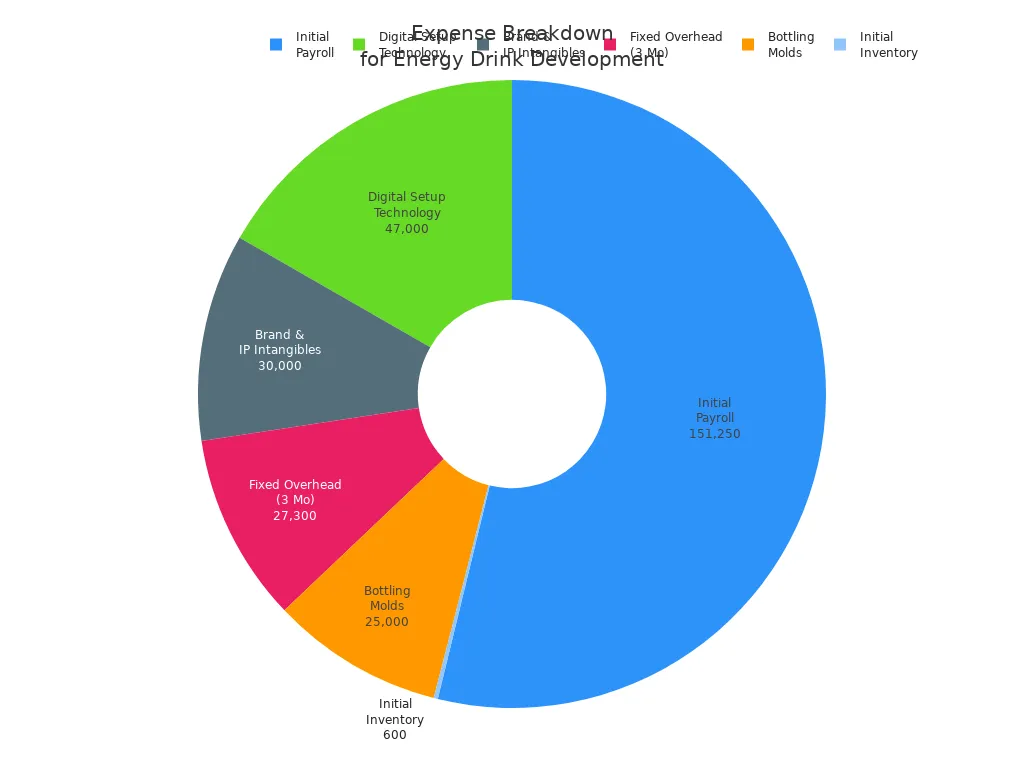
You need to understand where your money goes. The biggest expenses in custom energy drink development fall into a few main groups. Let’s break them down:
Expense Category
Cost
Brand & IP Intangibles
$30,000
Digital Setup Technology
$47,000
Bottling Molds
$25,000
Fixed Overhead (3 Mo)
$27,300
Initial Payroll
$151,250
Initial Inventory
$600
Total
$326,150
Let’s look at what these categories mean for your budget:
Product Development and Formulation: This is where you create your recipe. You pay for lab work, taste tests, and maybe a food scientist. These costs can range from $3,000 to $50,000, depending on how complex your drink is.
Packaging and Label Design: You want your energy drink to stand out. Good packaging can cost $2,000 to $7,000 for design, plus $0.50 to $3.00 per unit for materials.
Manufacturing and Production: The first run is expensive. You pay for bottling molds, setup, and the first batch. This can be $5,000 to $30,000 or more.
Legal, Licensing, and Compliance: You need to follow the rules. Expect to spend $1,000 to $5,000 on legal fees, insurance, and licenses.
Marketing and Launch: Getting your drink noticed takes money. You might spend $5,000 to $50,000 or more on ads, samples, and events.
Logistics and Warehousing: You need a place to store your drinks and a way to ship them. This can add $3,000 to $15,000 to your cost.
Tip: Payroll and raw materials often take up the largest part of your budget. If you use premium ingredients, your cost of goods sold will rise. Watch these numbers closely to protect your profit.
You will see that the cost of goods sold includes everything from ingredients to packaging and labor. If you want to keep your business healthy, track these expenses and adjust as trends change. The right choices help you control your production costs and stay ahead in the energy market.
Development Expenses Breakdown
Formula Development and Testing Cost
You begin by making your energy drink formula. This step decides how your drink tastes and works. It also makes sure your drink is safe. Most brands pay $20,000 to $50,000 for the first formula and small tests. If you want to make a lot of drinks, the price can go up to $100,000 or even $200,000. Here’s a quick look:
Stage of Development
Estimated Cost Range
Initial Formulation & Pilot Testing
$20,000 - $50,000
Full Production (5,000-10,000 cases)
$100,000 - $200,000
If you use special ingredients or test many times, it costs more. You might need 5 to 12 tries to get your formula right. Every new flavor or ingredient adds to your cost. If you want a special taste or extra benefits, you will pay more for the formula.
Note: Harder formulas cost more money to make. Know what you want so you can save money.
Packaging Design Expenses
Packaging is not just for holding your drink. It helps people notice your drink and keeps it fresh. Simple packaging design costs $500 to $2,000. If you want a full plan with research and testing, you might pay $8,000 to $15,000. Here’s a breakdown:
Line Item
Typical Range
Notes
Strategy
$500–$5,000
Scope, personas
Design
$1,000–$15,000
Iterations
Research/Testing
$1,000–$8,000
Validation
Production Prep
$300–$3,000
Print-ready files
Fancy materials and cool designs can help you sell more. But they also make your costs higher. Many young people like packaging that does more. If you use eco-friendly materials or easy-open lids, you may keep more customers and sell more drinks.
Manufacturing Setup Cost
Setting up your factory costs a lot. You need to pay for land, buildings, machines, and supplies. Here’s what you might need to pay for:
Cost Component
Description
Land/Infrastructure
Site, utilities, facility design
Machinery/Equipment
Mixing tanks, filling machines
Raw Materials
Ingredients, packaging materials
Labor/Staffing
Production, quality control
Licensing/Compliance
Regulatory approvals
Utilities/Overheads
Electricity, water, maintenance
How much you make and where you build matters. If you wait to hire or miss your goals, you could pay $27,000 more each month. Planning for growth helps you spend less and avoid money problems.
Legal and Compliance Fees
You must follow rules to sell energy drinks. Legal fees, licenses, and insurance usually cost $1,000 to $5,000. If you want to sell in more places or use special ingredients, you will pay more. Always check new rules to keep your drink safe and legal.
Marketing and Distribution Expenses
You need good marketing to get people to buy your drink. You might spend $5,000 to $50,000 or more on ads and launch events. Social media and influencers are great for new brands. Instagram and TikTok help you reach young people. Influencer ads can make more people know your brand by 60%. They can also help you sell 20-30% more. Plan how you ship your drink to save money and keep things moving.
Tip: Watch your marketing and shipping costs closely. Change your plan when trends change so you get the most for your money.
Cost to Produce an Energy Drink: Ongoing Production
Small Batch vs. Mid-Scale Production Cost
When you make your energy drink, you must pick how many cans or bottles to produce. Making a small batch helps you test the market and keep your spending under control. But each can or bottle costs more to make this way. If you choose mid-scale production, you pay less for each drink. But you need more money at the start.
Here’s a table that shows how the price changes:
Production Type
Unit Cost Range
Small Batch
$0.10 to $0.50+ per bottle/can
Mid-Scale
Varies, but often lower per unit
Making more drinks lets you buy ingredients in bigger amounts. This helps you get better prices from co-packing partners. You also save money on making the drinks. But remember, making more drinks means you spend more at first.
Ingredient Quality Impact
The kind of ingredients you use changes your costs and the taste of your drink. If you pick premium ingredients, your cost to make each drink goes up. Cheaper ingredients save money, but they might not be as good or trendy. You have to find a good balance between price and quality to compete with other brands.
Packaging Choices and Expenses
Packaging is important for more than just holding your drink. It affects how you ship, store, and show off your brand. Aluminum cans are popular because they are light and can be recycled. This makes shipping cheaper. Stick packs use less material and take up less space, so they are easy to store. Glass bottles look nice, but they are heavy and can break when shipped. Most brands pick aluminum cans because they cost less and work well with co-packing.
Distribution and Logistics Cost
Getting your energy drink to stores or customers costs extra money. How you move your product can change your budget a lot. If you use co-packing partners, you need to plan how your drink gets from the warehouse to the shelf. Distributors can have problems if there are too many types of products. This can slow things down and make costs go up. A smart plan for getting your drink to stores helps you save money and beat other brands.
Tip: Watch for new trends in energy drinks. Change your plans for making and packing your drink to keep costs low and your brand strong.
Energy Drink Development Steps
Concept and Market Research
You start your custom energy drink journey by looking at what people want. Study the market and spot new energy trends. Ask yourself, “What makes my drink different?” This step helps you avoid wasting money on ideas that do not fit. You will spend time and some money here, but it saves you from bigger mistakes later.
Recipe Formulation
Now, you work on the recipe. You pick the right ingredients for taste, energy, and function. You might need a food scientist to help. Each test batch adds to your cost. If you want a pilot batch, most manufacturers ask for at least 50 to 60 cases. This usually costs around $20,000. You need to test and tweak until you get the energy boost and flavor you want.
Branding and Design
Branding makes your drink stand out. You create a logo, choose colors, and design the packaging. Good design grabs attention and builds trust. You pay for designers, research, and maybe focus groups. Packaging design also affects your manufacturing cost, since special materials or shapes can be more expensive.
Manufacturing Setup
This step gets your drink ready for large-scale production. You set up water treatment, ingredient mixing, and pasteurization. Some drinks need carbonation. You fill and seal bottles or cans, then label and pack them. You need to buy or lease space, get machines, and hire staff. Manufacturing costs include land, equipment, and training. If you want a full-scale batch, you need at least 10,000 cases, which can start at $200,000.
Tip: Plan your manufacturing carefully. A smart setup keeps your budget on track and helps you scale up when demand grows.
Regulatory Approval
You must follow the rules for energy drinks. Get the right licenses and approvals before you sell. This step protects your brand and keeps your drink safe. You pay for legal help, testing, and paperwork. If you use special ingredients, you might need extra checks.
Launch and Marketing
You are ready to launch. You need a plan to get your energy drink into stores and online. Spend money on ads, samples, and events. Social media helps you reach more people. Shipping and distribution add to your cost, so plan for these in your budget.
Note: Each step in the manufacturing process adds to your total cost. Track your spending and adjust as you learn what works best.
Expert Involvement and Budgeting Tips
Hiring Formulation Experts
You may think you can do everything alone, but hiring formulation experts helps you save time and money. These experts know how to mix ingredients for taste, energy, and safety. They help you avoid mistakes when making your drink. They also make sure your drink follows industry rules. If you want your energy drink to be special, you need people who know how to make it and can help you at every step. You should hire a specialist when you start making your recipe or when you want to make more drinks.
Navigating Regulations
Rules can seem confusing. You must follow rules for labels, safety, and making your drink. Experts can tell you what papers you need and how to get approvals. If you skip this, you might face delays or get fined. Check local and national rules before you start making your drink. Following the rules keeps your energy drink in stores and protects your brand.
Avoiding Costly Mistakes
Many new energy drink owners make mistakes that hurt their monthly budget. Here are some common problems:
Not having enough cash can stop your business. You need enough money to pay for making your drink.
Not looking for new markets slows your growth. Try selling online or working with local stores to find more customers.
You can avoid these problems by planning your monthly budget and watching every cost.
Practical Budgeting Strategies
You need a clear monthly budget to control costs. Start by finding out how much each drink costs to make, including making, printing, labor, and shipping. This helps you set prices and make a profit. Think about wholesale prices and shipping early so you do not lose money later. Pick packaging that fits your budget and can be recycled, like aluminum cans or PET bottles. Use biodegradable cardboard for carrying packs. Check your budget often and change it as your energy drink business grows. Smart budgeting helps you keep making drinks and handle changes in production.
You now know the real cost of launching your own energy drink. Careful planning helps you avoid surprises and keeps your budget on track. If you want your energy brand to stand out, stay flexible and watch your expenses. Get expert advice when you need it. Keep up with energy regulations and trends. Ready to create your energy drink? Take the first step and turn your idea into a product people love.
FAQ
How long does it take to launch a custom energy drink?
You can expect the process to take 6 to 12 months. This includes recipe development, packaging design, manufacturing setup, and regulatory approval. Planning ahead helps you avoid delays.
Can I start with a small batch to test my energy drink?
Yes! Many brands begin with a pilot batch of 50 to 60 cases. This lets you test your recipe and get feedback before scaling up. Small batches cost more per can but reduce risk.
What is the minimum investment for a custom energy drink?
You need at least $100,000 to cover basic development, packaging, and production. If you want premium ingredients or advanced marketing, your costs will rise. Careful budgeting helps you stay on track.
Do I need special licenses to sell energy drinks?
You must get the right licenses and follow FDA rules. Local laws may require extra permits. Always check regulations before you launch your drink.
How can I keep production costs low?
Choose simple packaging.
Buy ingredients in bulk.
Work with experienced co-packers.
Smart choices help you save money and grow your brand.