Views: 0 Author: Site Editor Publish Time: 2026-08-31 Origin: Site
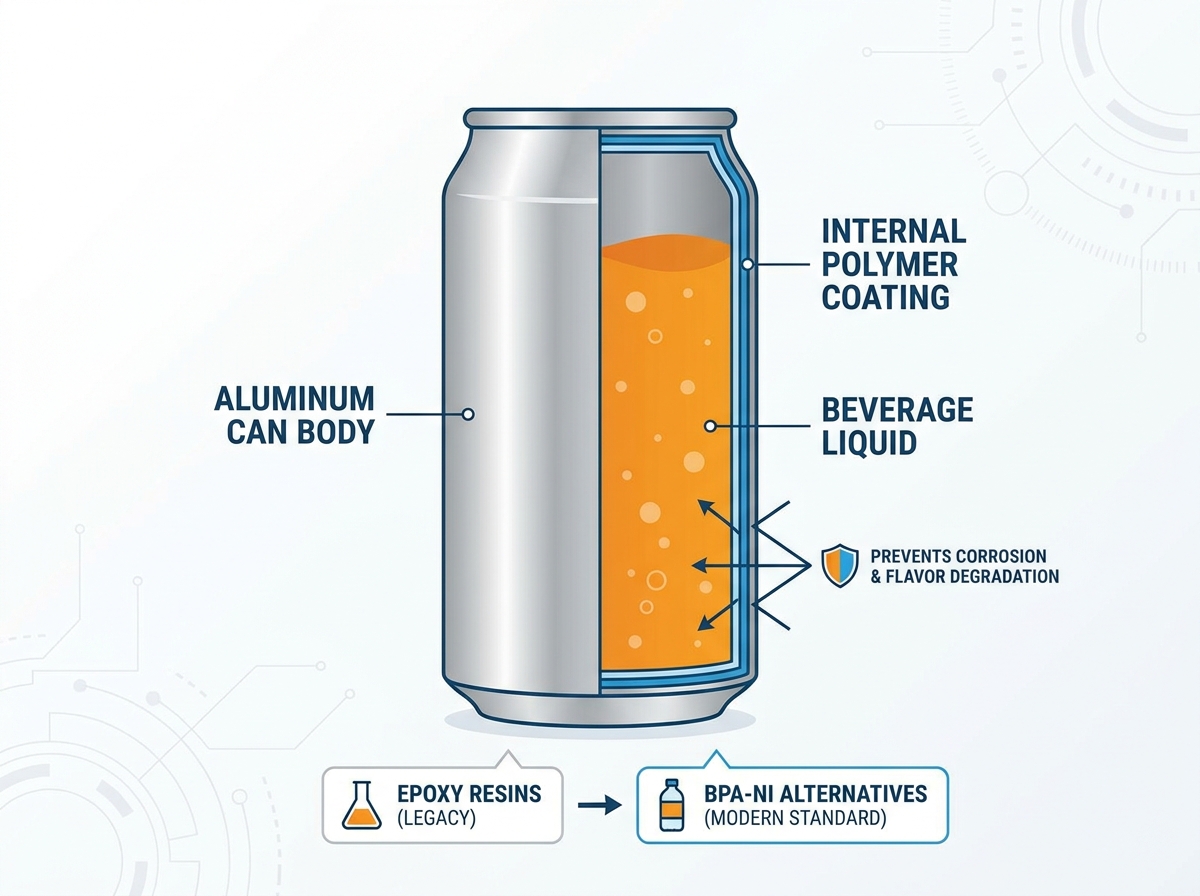
Raw aluminum cannot touch the liquid inside commercial drinks. Without a microscopic internal coating, acidic or active beverages rapidly corrode the metal. This corrosion compromises structural integrity. It also creates harsh metallic off-flavors. Internal liners represent far more than a basic manufacturing detail. They serve as a critical compliance, shelf-life, and brand-protection decision for beverage companies worldwide. A failed liner quickly leads to catastrophic product recalls and ruined brand trust. We designed this guide to help procurement teams and brand owners confidently evaluate modern coating technologies. You will learn how to navigate complex regulatory shifts. We will help you specify the exact internal lining required for your specific liquid profile. By understanding these invisible barriers, you can balance chemical performance, consumer safety, and pristine sensory preservation.
Key Takeaways
All commercial beverage cans require an interior polymer lining to prevent metal corrosion and flavor degradation.
The industry standard is rapidly shifting from legacy epoxy resins to BPA-NI (Bisphenol A Non-Intent) alternatives due to global regulatory pressures.
Coating selection must be dictated by the liquid's specific pH, carbonation levels, and ingredient profile.
Extensive "pack testing" is a mandatory step before commercial rollouts to verify coating compatibility and prevent costly recalls.
The Business Role of Internal Linings in Beverage Packaging
Corrosion Prevention
Internal linings act as an inert barrier between the sensitive liquid and the raw aluminum. When active ingredients touch bare metal, rapid oxidation occurs. This chemical reaction weakens the can walls. It frequently causes microscopic pinhole leaks. Even a microscopic failure ruins the product before it reaches the consumer. robust coatings protect beverage packaging cans from aggressive internal environments. High-acid liquids constantly attack the metal surface. The polymer liner absorbs this stress. It keeps the container structurally sound during transit, storage, and display.
Sensory Protection and Flavor Neutrality
Consumers expect your drink to taste exactly as formulated. They do not want metallic off-notes. Coatings prevent metal migration into the liquid. They also stop a phenomenon called "flavor scalping." Scalping happens when the packaging material absorbs essential flavor compounds from the drink. Citrus oils and delicate terpenes are highly susceptible to scalping. A high-quality liner remains entirely neutral. It ensures consumers taste the carefully crafted beverage, never the packaging.
Shelf-Life Extension
The chosen liner directly dictates product longevity. A perfectly matched coating extends the viable shelf-life from a few months to over a year. This extension fundamentally changes how brands operate. It expands your potential distribution radius. You can ship products globally instead of locally. It also simplifies inventory management. You suffer fewer losses from expired or degraded stock.
Common Mistake: Brands often assume a standard liner works for every new flavor. Changing just one ingredient can aggressively attack the old coating and ruin your entire inventory.
Primary Coating Technologies for Aluminum Cans
Epoxy Resins: The Legacy Standard
Epoxy resins dominated the market for decades. They offer incredible adhesion and flexibility. Epoxy easily withstands highly acidic liquids and aggressive manufacturing processes. However, their commercial viability is rapidly declining. Consumer advocacy groups and global regulators heavily scrutinize Bisphenol A (BPA), a core component of legacy epoxy. Brands now actively phase out these legacy liners to protect their public image and maintain market access.
Acrylic Coatings
Acrylics stepped in as an early BPA-free alternative. They deliver a remarkably clean flavor profile. Water and mild beverages perform very well inside acrylic liners. However, acrylics present manufacturing trade-offs. They are traditionally much more brittle than epoxy resins. Can manufacturers must apply them carefully. If applied incorrectly, the can-forming process creates micro-fractures in the acrylic film. These invisible cracks expose the bare metal and lead to rapid corrosion.
Polyester Coatings
Polyester has become the preferred high-performance option for food grade aluminum cans. It provides excellent structural flexibility. The material handles the intense mechanical stress of modern canning lines. Most importantly, it serves as a reliable BPA-NI (Non-Intent) solution. While highly versatile, polyester does have limitations. Highly aggressive liquids can degrade it over time. Beverages containing heavy acids or high copper content require specially modified polyester blends.
Oleoresin (Plant-Based/Natural)
Oleoresins represent the earliest days of can linings. Manufacturers derived these materials from natural plant resins and oils. Today, you rarely see them in modern high-speed beverage canning. They lack the robust chemical resistance required by highly carbonated or acidic modern drinks. You might occasionally spot them in niche food applications, but they do not meet the performance metrics required for commercial liquids.
Technology Type
Primary Advantage
Notable Limitation
BPA Status
Epoxy Resins
Maximum flexibility and chemical resistance
Strictly regulated; poor consumer perception
Contains BPA
Acrylic Coatings
Exceptional flavor neutrality
Brittle nature risks micro-fracturing
BPA-Free / BPA-NI
Polyester Coatings
Great balance of flexibility and compliance
Can struggle with highly corrosive liquids
BPA-NI
Oleoresin
Derived from natural materials
Inadequate chemical resistance for modern drinks
Naturally BPA-Free
Navigating the Transition to BPA-NI (Non-Intent) Solutions
Defining BPA-NI
You must understand the exact terminology driving the industry. "BPA-NI" stands for Bisphenol A Non-Intent. This means manufacturers do not intentionally add the chemical into the coating formula. However, claiming a product is 100% "BPA-free" carries scientific risk. Trace amounts of BPA exist throughout the global manufacturing environment. Minor cross-contamination can theoretically occur. Using the BPA-NI designation protects brands legally while confirming a commitment to safer packaging.
Regulatory and Compliance Drivers
Ignoring coating compliance introduces severe business risks. California's Proposition 65 mandates strict warning labels for products containing BPA. In Europe, updates from the European Food Safety Authority (EFSA) continually lower acceptable daily intake limits. The FDA strictly monitors substance migration limits. Failing to adopt compliant coatings can lock your product out of major retail chains. Retailers refuse to carry products carrying regulatory baggage.
The Rollout Reality
Switching to a BPA-NI coating is rarely a simple swap. Brands face distinct implementation hurdles. The new coating might not perform exactly like the old epoxy liner. You may need to accept altered shelf-life expectations. A beverage that once lasted twelve months might now peak at nine months. Furthermore, production facilities might need to modify pasteurization parameters. New polymers respond differently to sustained heat, requiring careful temperature management during canning.
Matching the Coating to the Liquid: Evaluation Criteria
Beer and Malt Beverages
Beer features relatively low acidity. However, it is exceptionally sensitive to flavor alterations. A poorly chosen liner quickly destroys a carefully brewed flavor profile. Beer also contains sulfur compounds. These compounds react aggressively if they touch bare aluminum. Breweries require Beverage Cans featuring absolute flavor neutrality. The coating must block all metal interaction while resisting sulfur degradation over long storage periods.
Carbonated Soft Drinks (CSDs) and Energy Drinks
These liquids represent some of the most aggressive environments in commercial packaging. They combine high acidity (very low pH) with intense carbonation levels. Ingredients like phosphoric acid and citric acid constantly attack the liner. Energy drinks frequently include complex vitamin blends and corrosive synthetic dyes. These beverages demand robust, highly cross-linked coatings. Manufacturers often apply heavier coat weights to withstand the severe internal pressures and corrosive chemistry.
Canned Water (Still and Sparkling)
Water seems perfectly harmless. Chemically, it is very mild. Yet, water is notoriously difficult to package. It lacks strong flavors to mask packaging defects. Any microscopic flavor scalping or chemical migration becomes immediately obvious to the consumer. Canned water requires ultra-high-purity liners. The focus shifts entirely away from chemical resistance and leans heavily into zero-migration performance.
Wine and Ready-To-Drink (RTD) Cocktails
The RTD cocktail boom created massive challenges for coating manufacturers. These drinks contain elevated alcohol content. They feature fluctuating pH levels. Wine contains active sulfites. High ABV acts as a potent solvent. It slowly degrades standard liners over time. Sulfites actively attack polymer structures. Brands packaging wine or cocktails must specify specialized, heavy-duty liners. A standard soda liner will fail quickly when exposed to a 10% ABV citrus margarita.
Best Practice: Always provide your can manufacturer with a complete, unredacted ingredient list. Hidden preservatives or trace acids often cause unexpected coating failures.
Sourcing Strategy for Private Label Packaging
Mandatory Pack Testing
Buyers should never skip compatibility testing. Assuming a stock can will hold your custom liquid is dangerous. You must authorize rigorous pack testing. This process verifies performance before you buy millions of units.
A standard pack testing protocol involves these core steps:
Filling: The lab fills test cans with your exact commercial liquid.
Incubation: They store these cans in temperature-controlled chambers (often around 37°C or 98°F). This elevated heat accelerates chemical reactions.
Evaluation: Technicians open the cans at 3-month and 6-month intervals. They measure structural degradation, metal migration, and flavor shifts.
You must actively question potential suppliers about their application methods. A great coating fails if applied poorly. Ask them how they ensure spray application consistency. Inquire about their curing oven temperatures. If ovens run too cold, the polymer fails to cross-link. If they run too hot, the coating burns and becomes brittle. Request their internal Quality Assurance (QA) data. They should routinely test internal film weights and use enamel rater machines to check for microscopic metal exposure.
Volume and Lead Time Considerations
Specifying a custom BPA-NI liner impacts your supply chain. Stock cans with standard liners ship quickly. They feature low minimum order quantities (MOQs). Specialized coatings require dedicated production runs. This inevitably increases your MOQs. It also extends lead times. Procurement teams must build these delays into their launch calendars. Supply chain agility decreases when you demand high-performance, customized internal layers.
Conclusion
The interior coating serves as a non-negotiable factor in product safety. It protects your precise flavor profile. It shields your brand reputation from devastating leaks and recalls. Transitioning to modern BPA-NI solutions requires careful planning and rigorous evaluation. Every brand must align their coating chemistry closely with their specific liquid attributes.
We advise decision-makers to initiate supplier conversations early. Start by providing a detailed liquid specification sheet to your co-packer. Include the exact pH, carbonation volumes, and full ingredient lists. Use this data to begin the shortlisting process immediately. Launch comprehensive pack testing well before your commercial rollout dates to guarantee absolute product integrity.
FAQ
Q: Can you buy beverage cans without an internal coating?
A: No. Unlined aluminum will react instantly with almost all commercial beverages, leading to leaks and contamination. The rapid oxidation creates metallic tastes and compromises the physical structure of the can.
Q: What does BPA-NI actually mean?
A: Bisphenol A Non-Intent. It means the chemical is not deliberately formulated into the liner, protecting brands against regulatory action, though trace environmental amounts may theoretically exist due to global manufacturing cross-contamination.
Q: How do I know if a coating will change the taste of my drink?
A: Through rigorous pack testing and sensory panels. The right coating is entirely inert, but mismatching a coating to a liquid (e.g., using a basic water liner for a high-acid energy drink) causes flavor scalping and noticeable taste degradation.