Energy Drink Can Sizes: 250ml, 330ml and 12 oz Compared
Views: 0 Author: Site Editor Publish Time: 2026-10-07 Origin: Site
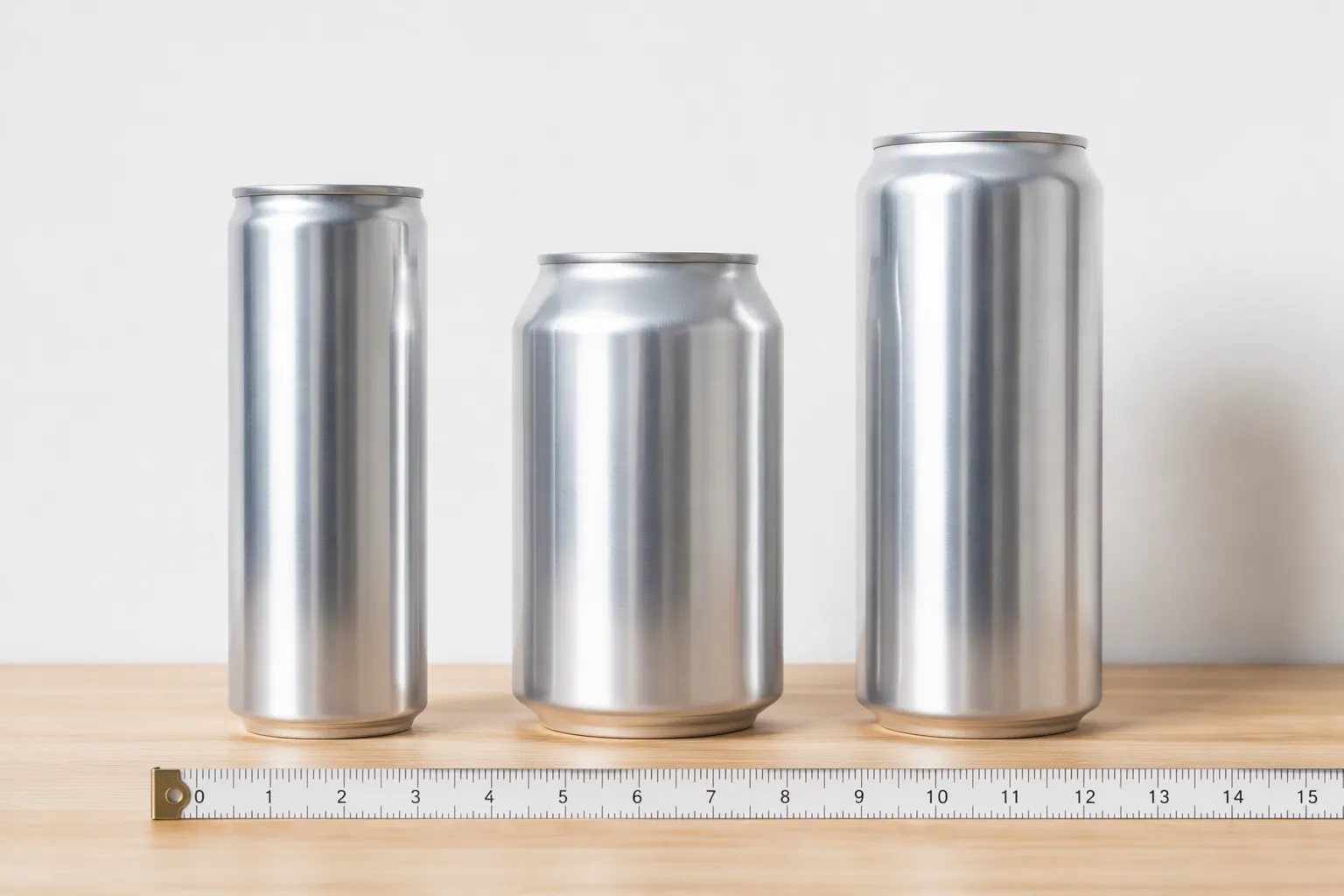
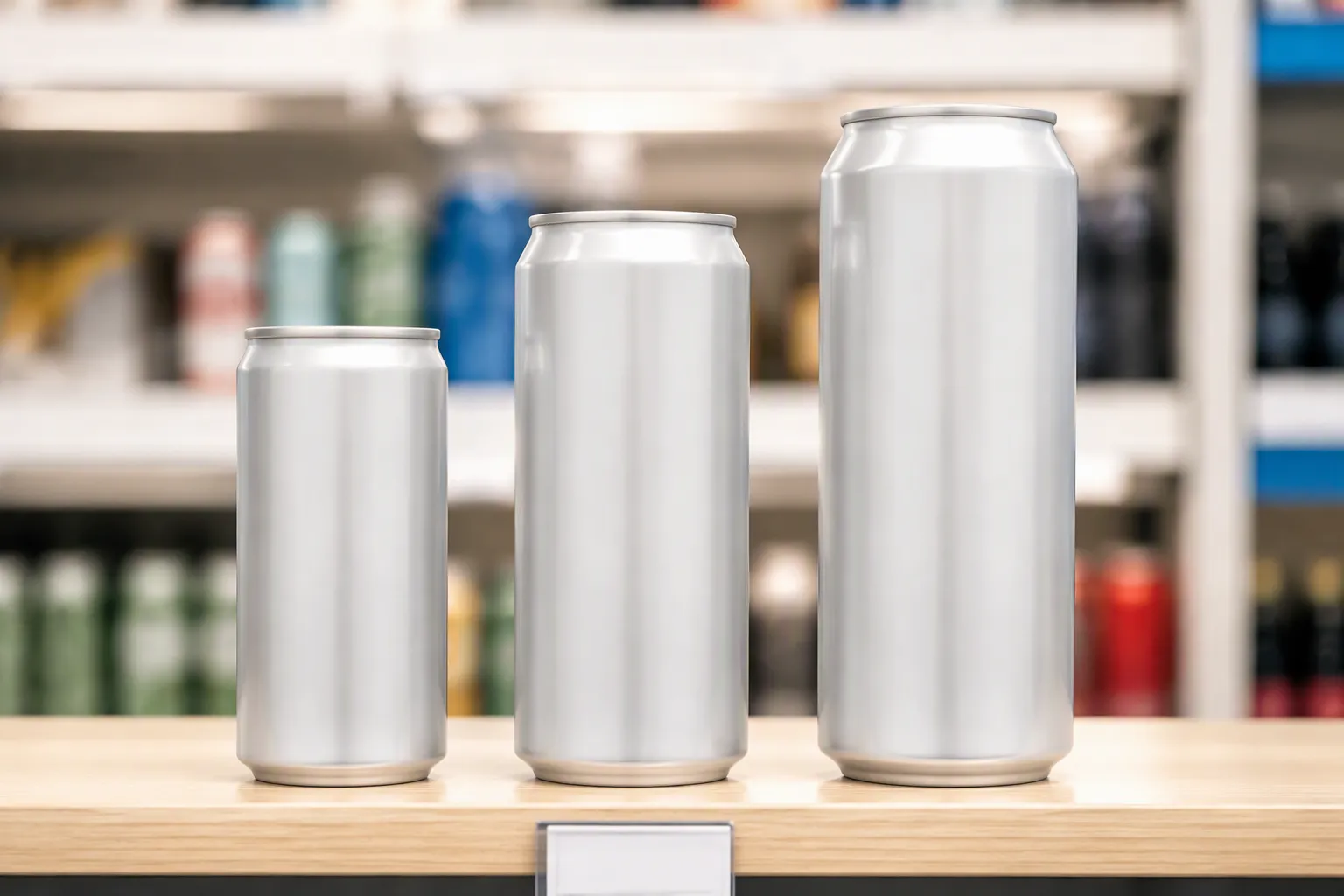
When it comes to energy drink can sizes, a 250ml can is the first premium size. A 330ml can is the world standard. A 12 oz (355ml) can is the American top choice for value and performance. You may ask why one energy drink brand sells three different energy drink can sizes in different countries. The answer is local habits, shelf space, and pricing. This post compares origin, market positioning, cost, logistics, and consumer perception for each energy drink can size. You will see how each energy drink can size serves a clear purpose. That knowledge helps you pick the right energy drink can size for your market.
Key Takeaways
The 250ml can is the original premium size. It is popular in Southeast Asia and parts of Europe.
The 330ml can is the global standard. It offers a good balance of cost and value.
The 12 oz (355ml) can is the American favorite. It is the most popular size in the US.
Choose your can size based on your market, sales channel, and brand goals.
250ml Energy Drink Can: The Original Premium Format
Origin and Market Strongholds
The 250ml can was the first energy drink size ever made. Red Bull grew its worldwide brand on this exact size, and the classic can still holds 8.4 fl oz (250 ml). You also see the same 250ml format with wine and cold drinks. That shared past gives the size a familiar, premium feel.
The 250ml slim can is 53 mm in diameter. This shape rules Southeast Asia and parts of Europe. People there see the 250ml format as the normal pick for a quick, strong boost. The 250ml can also works great as a canned energy drink you drink on the go.
Advantages and Production Considerations
The 250ml slim can is the industry standard for very strong energy drink formulas. Pioneer brands made this profile, and buyers now tie it to fast energy. This small format packs shelves tightly, so stores fit more units into every inch of cooler space. The smaller volume also gives brands a higher profit margin per fluid ounce.
Production teams must match parts with care. A 250ml slim can usually needs a smaller 200 end instead of the standard 202 end. Buyers should check that ends fit the exact can body. Per unit, slim cans can cost a bit more because of market demand and special lines. That gap has shrunk as sleek cans became a leading industry format.
Printing space matters here. A 250ml energy drink can gives you a narrow canvas, so you must place your logo, flavor name, and key claims with care. Limited space forces bold, simple designs. Many brands use this limit to build a premium look. A private label energy drink in this size often leans on clean typography and strong color blocks. If you plan custom energy drinks, work with an energy drink manufacturer early to test how artwork wraps around the slim body.
330ml Energy Drink Can: The Global Standard Can
Where 330ml Dominates
The 330ml can is the global production standard. You see this size most often in the UK and across Europe, where it sits right beside the 250ml can on store shelves. Many brands treat the 330ml format as their default for a canned energy drink. The 330ml format also travels well to the Middle East and other export markets.
The 330ml sleek can shares the same footprint as a 250ml can. It is simply taller. That design detail matters at retail. A taller can takes up the same shelf width while offering more volume. Stores keep the same planogram. Shoppers get more drink for their money. This is why the standardized 330ml format wins in markets that value a bigger single serving.
Cost, Logistics, and Brand Fit
The 330ml size changes your cost math. A larger can spreads filling, sealing, and labeling over more liquid. That lowers your per-unit production cost in many cases. The standardized 330ml format also fits standard trays and pallets, so you move more units per truckload. Pallet efficiency improves, and transportation cost per can drops.
Brand fit matters too. A 330ml energy drink can suits a mainstream, everyday image. A 250ml energy drink can feels more premium and intense. If you plan custom energy drinks for Europe, the 330ml format is often the safer bet. Work with an energy drink manufacturer that runs advanced automated filling lines. Shandong Jinzhou offers OEM and ODM services, private label energy drink support, and worldwide logistics for brands targeting European and Middle Eastern markets.
12 oz (355ml) Energy Drink Can: The American Favorite
Why the US Prefers 12 oz
The 12 oz (355ml) can is the standard size for most beverages in America. You see it with carbonated soft drinks and beer every day. Red Bull offers a us 12 fl oz (355 ml) can for the American market. This size feels normal to US shoppers. It fits cup holders, vending machines, and store shelves across the country.
Americans also favor larger formats. The 500ml (16 oz) can accounts for approximately 60% of US energy drink sales. That number shows a clear pattern. US buyers want more liquid per can. A 500ml format gives them a bigger single serving. Many brands now push the 500ml format as their main US offer. The 500ml can sits beside the 12 oz can on shelves. Some stores stock more 500ml units than 12 oz units. The 500ml format wins with value-focused shoppers. A 500ml can also works well for long drives or full workdays. You can find the 500ml size in most gas stations and big-box stores.
A 340ml can is the same as a standard 12 oz can. Fillers set the line to fill 15ml lower to account for inflation. That small gap adds up over thousands of units. Brands use this trick to hold the line on price. You still get a 12 oz energy drink can, but the fill level drops. This practice is common across many canned goods.
The Most Popular Energy Drink Can Size
The 12 oz can is the most popular energy drink can size in the US. It beats slim energy drink cans and sleek energy drink cans in total volume sold. You see this size in gyms, convenience stores, and e-commerce channels. A canned energy drink in 12 oz fits a quick workout boost. It also suits a midday pick-me-up at your desk.
Shandong Jinzhou makes functional energy drinks with caffeine, taurine, electrolytes, and B-complex vitamins. These formulas deliver a clean caffeine dose for focus and endurance. The 12 oz energy drink can is ideal for gyms, convenience stores, and e-commerce. You can order custom energy drinks with your own label. Shandong Jinzhou acts as your energy drink manufacturer with full OEM support. Many private label energy drink brands start with this size. A private label energy drink in 12 oz gives you a strong entry into the US market.
Direct Comparison of Energy Drink Can Sizes
Dimensions, Markets, and Format and Caffeine Dose
You can see the key differences among energy drink can sizes in one table. This comparison covers dimensions, primary markets, format and caffeine dose, and price positioning.
Can Size
Height
Diameter
Primary Markets
Caffeine Dose Range
Price Positioning
250ml
134.0 mm
53 mm
Southeast Asia, parts of Europe
Lower end of range
Premium
330ml
115–146 mm
57.4–66 mm
UK, Europe, Middle East
Mid range
Value to mid
12 oz (355ml)
155.9 mm
57.4 mm
United States
Higher end of range
Value
The 250ml format uses a slim profile. Red Bull's classic 8.4 oz can measures 134.0 mm tall and 53.0 mm wide. The 330ml format comes in two shapes. A standard 330ml can stands about 115 mm tall with a 66 mm body. A sleek 330ml can reaches about 146 mm with a 57.4 mm body. The 12 oz energy drink can varies by brand. Celsius packs 355ml into a sleek body at 155.9 mm tall and 57.4 mm wide.
Caffeine dose positioning shifts with volume. A smaller 250ml can often carries a concentrated formula. A larger 330ml format spreads the same caffeine dose across more liquid. The 12 oz energy drink can sits in the middle for most US brands. Your caffeine dose range per can depends on your formula, not the can itself. Still, buyers link smaller cans with a stronger punch.
The size and shape of the can also shape branding and storage. A 250ml slim can fits tight cooler slots. A 330ml format takes the same shelf width but stands taller. A 12 oz energy drink can matches standard US vending slots. Each format changes how your label reads and how stores stack your product.
You will also find 8 oz (250 mL) cans with energy drinks and specialty sodas. These smaller servings suit light users or trial purchases.
Costs and Consumer Perception
Your per-unit production cost depends on can size. A larger can spreads filling and sealing over more liquid. That lowers your cost per fluid ounce. A 250ml can costs more per ounce to produce. The 330ml format and 12 oz energy drink can deliver better cost efficiency at scale.
Consumer perception follows a clear pattern. A 250ml slim can signals potency and concentration. Shoppers feel a small amount holds all the power they need. A 330ml sleek can projects a modern, premium image. Brands use it for zero-sugar or fashion-forward functional drinks. A standard 330ml can wins on value. Buyers feel they get more liquid for their money. Larger formats like 500ml balance value with practicality. The 500ml format appeals to value-driven shoppers. You see the 500ml size in gas stations and big-box stores. The 500ml can also works for long drives. Many brands push the 500ml option as their main US offer. The 500ml format sits beside the 12 oz can on shelves. Some stores stock more 500ml units than 12 oz units. The 500ml can gives buyers a bigger single serving. A 500ml format also suits full workdays. You can find the 500ml size in most convenience stores. The 500ml can beats smaller sizes in total volume sold in the US.
These patterns show that smaller, slimmer cans signal premiumness. Standard larger formats link to value and broad appeal. Your choice among energy drink can sizes shapes both your brand image and your bottom line.
Choosing the Right Can Size
Match Size to Market and Channel
Your target market decides your can size before anything else. Europe and Asia-Pacific like the 250ml and 330ml formats. The United States prefers larger options. The 500ml can alone makes up about 60% of US energy drink unit sales. That one number shows how much American shoppers want bigger servings.
Your retail channel fit matters just as much. A premium on-trade or health-focused outlet goes well with a 250ml energy drink can. Supermarkets and value stores sell 330ml units faster. Convenience stores and sports venues do best with the 500ml format. You should plan your channel before you pick a size.
Factor
250ml (8.4oz)
330ml (11.2oz)
500ml (16.9oz)
Dominant Market
Europe, APAC
EU, APAC, global
US, Sports/C-store
Best Channel
Premium on-trade, health
Supermarket, value
C-store, sports
Brand Positioning
Premium / functional
Standard / value-health
Performance / value
Production Cost
+15–20% vs 330ml
Baseline
+10–15% vs 330ml
Caffeine Range
80–120mg
100–150mg
150–300mg
This table gives you a three-step framework. First, pick your main geographic market. Second, choose your route to market. Third, define your brand positioning. Each step narrows your options among energy drink can sizes.
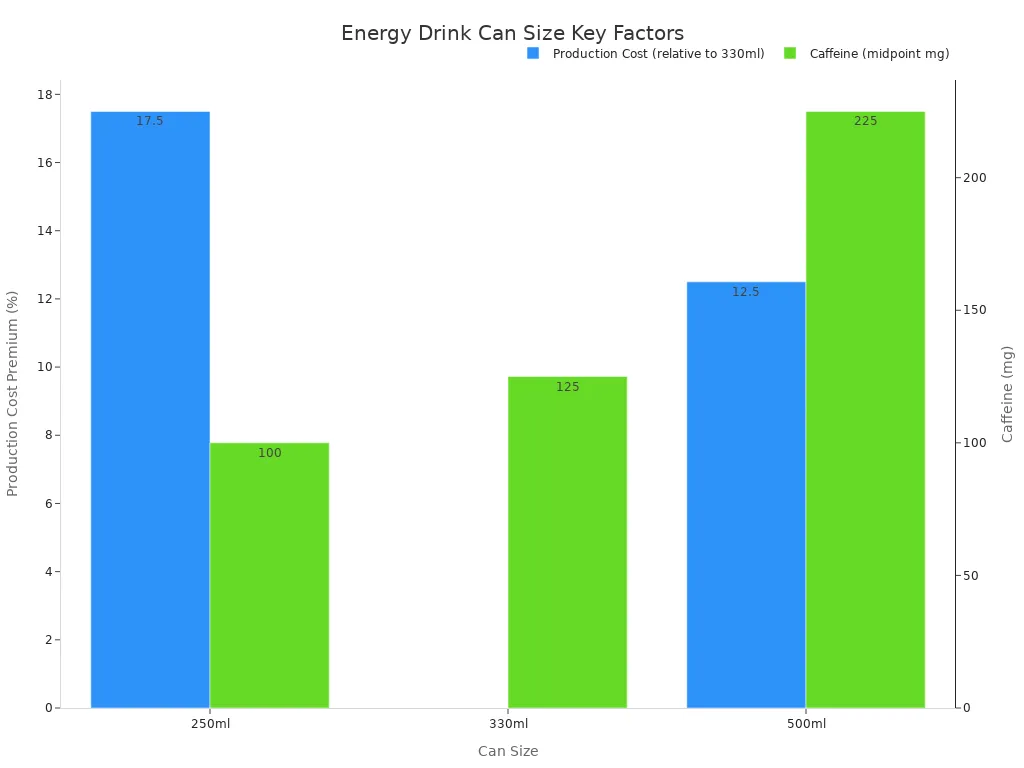
The chart above shows how per-unit production cost and caffeine dose change across sizes. The 250ml and 500ml options carry a 15–20% production cost premium over the 330ml baseline. That gap comes from lower production line optimization. The 330ml format is still the most cost-efficient to manufacture. Your caffeine dose range also goes up with volume. A 250ml can usually holds 80–120mg. A 500ml can reaches 150–300mg.
Align Size with Brand Goals
Your brand goals shape every oem production decision you make. A premium or functional image fits a 250ml slim can. A standard or value-health position suits the 330ml format. A performance or value image pairs with the 500ml option. You should match your can size choice to the story you want to tell.
Many brands launch with a 330ml core SKU first. They then extend to 250ml for premium on-trade channels. They add 500ml for value and sports channels. This staged approach lowers risk. It also lets you test retail channel fit across markets before scaling.
Flavor variety adds another layer. Sugar-free, low-calorie, and sparkling options work across all sizes. A sparkling drink often suits a sleek 330ml can. A sugar-free formula pairs well with a 250ml slim can. You can order custom energy drinks through a private label energy drink program. Shandong Jinzhou supports custom formulas, private label designs, aluminum can and carton printing, and large-scale production. Their OEM and ODM services help you move from concept to shelf. You can also explore Custom Energy Drink options for your brand.
Your oem production decision should weigh market, channel, and brand together. No single factor wins alone. A strong plan balances all three.
No single can size works best for every brand. The right energy drink can size for you depends on your market, your sales channel, and your brand goals. Use the comparison table and decision framework above as helpful tools. Looking ahead, 250ml formats keep growing, while 500ml stays strong in sports and gaming. Aluminum already makes up 88.5% of energy drink packaging. A good OEM partner shortens your time to market, helps with EU and US rules, and grows with your demand. Shandong Jinzhou offers custom energy drinks, private label energy drink programs, and full OEM support. Start your next launch with the right size and the right partner.
FAQ
Which energy drink can size should you pick for a new product?
Start with your target market. The US favors 12 oz and 500ml formats. Europe and Asia lean toward 250ml and 330ml. Your sales channel matters too. Gyms and convenience stores move larger cans. Premium outlets suit slim energy drink cans. A custom energy drink manufacturer can help you test options before you commit.
How do energy drink can dimensions affect shelf fit and shipping?
A 250ml can shares the same footprint as a 330ml sleek can. The 330ml version just stands taller. That means you keep the same shelf width while offering more liquid. A 12 oz energy drink can matches standard US vending slots. These details shape pallet efficiency and transportation cost per unit.
Do slim and sleek cans change the drinking experience?
Yes. Slim energy drink cans feel more concentrated and premium. Sleek energy drink cans project a modern, fashion-forward image. Standard cans signal everyday value. Your can shape tells shoppers what to expect before they take a sip. Match the format to your brand story.
How much caffeine fits in each can size?
Caffeine dose depends on your formula, not the can. A 250ml can typically holds 80–120mg. A 330ml can carries 100–150mg. A 500ml format reaches 150–300mg. You control the strength. Work with your energy drink manufacturer to set the right range for your audience.
Can you order private label energy drinks in different can sizes?
Absolutely. Many private label energy drink brands launch a 330ml core SKU first. They add 250ml for premium channels and 500ml for value and sports. Shandong Jinzhou supports custom formulas, private label designs, and aluminum can printing. Their OEM and ODM services cover large-scale production and worldwide logistics.