![Energy Drink Functional Benefits and Market Revitalization]()
The energy drink market is growing fast and changing a lot. This is because people want different things now.
Metric/Region | Value/Projection |
Global Market Size 2024 | USD 79.39 billion |
Global Market Size 2025 | USD 85.25 billion |
Projected Market Size 2030 | USD 125.11 billion |
CAGR (2025-2030) | 8.0% |
North America Revenue Share | 37.1% (largest regional market 2024) |
Asia Pacific | Fastest growing region |
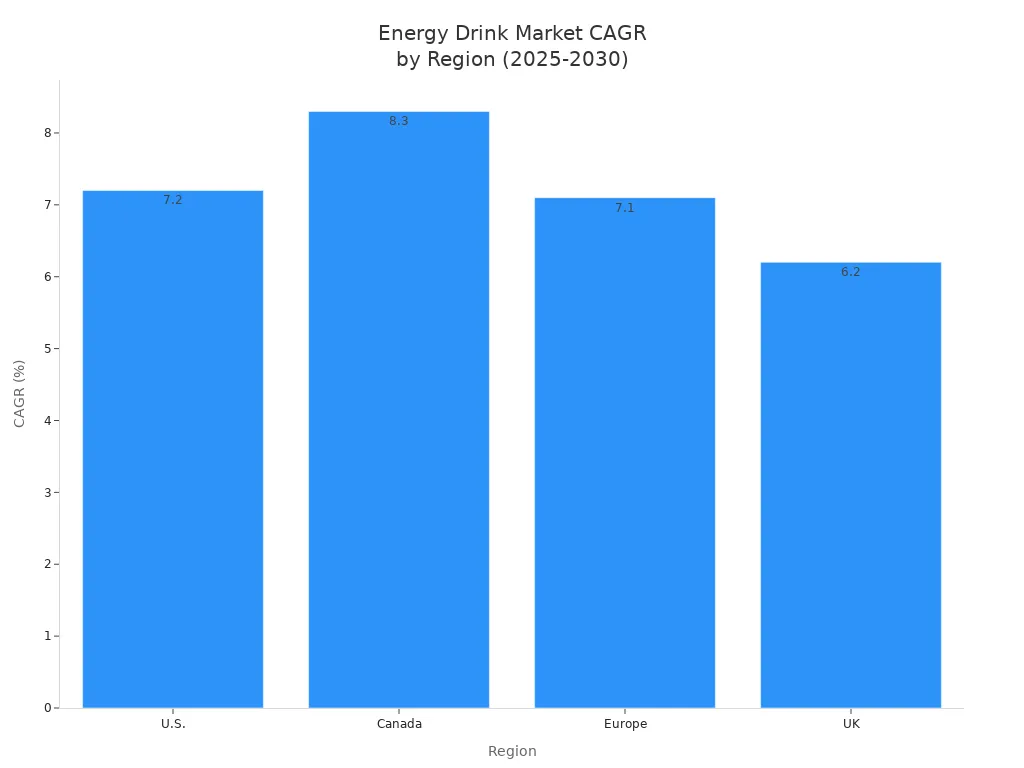
U.S. Market CAGR (2025-2030) | 7.2% |
Canada Market CAGR (2025-2030) | 8.3% |
Europe Market CAGR (2025-2030) | 7.1% |
UK Market CAGR (2025-2030) | 6.2% |
Packaging (Cans) Revenue Share 2024 | 82.4% |
![Bar chart comparing CAGR of energy drink market in U.S., Canada, Europe, and UK from 2025 to 2030]()
Manufacturers are trying to fix health worries. They now make drinks with natural ingredients. Some drinks have less sugar. Some drinks have extra functional benefits. Products for wellness are becoming popular. Companies care more about the environment. They also make new types of drinks. This shows they listen to what people want.
Key Takeaways
Energy drinks give fast energy. They help you focus and remember things. They can also make you feel better. This is because of ingredients like caffeine, B vitamins, and herbal extracts.
People now want energy drinks with natural ingredients. They also want less sugar. They like drinks that help with immunity and muscle recovery.
Plant-based and clean-label energy drinks are getting more popular. Young people like these drinks the most. They want products that are natural, vegan, and made the right way.
New hybrid energy drinks do more than give energy. They also help with hydration and recovery. These drinks use natural caffeine and other helpful ingredients. This gives steady energy and helps you feel well.
The energy drink market is growing fast. This is because of new ideas and health trends. Eco-friendly packaging and clear labels also help. These things make people trust the drinks more.
Functional Benefits
![Functional Benefits]()
Energy and Alertness
Energy drinks give a quick boost of energy. They help people feel more awake. Caffeine is the main stimulant in these drinks. It works on the brain to make you feel alert. A regular 250 ml energy drink has about 80 mg of caffeine. This is about the same as a cup of coffee. Young athletes may feel less tired after drinking them. They can also perform better for a short time.
Studies show energy drinks can help fight tiredness. They help people pay attention during hard tasks.
Caffeine helps people focus. It is useful for tough activities.
Sugar, B vitamins, taurine, and herbal extracts work with caffeine. These ingredients make the energy boost stronger.
Energy drinks help you feel awake for a short time. The effects do not last very long.
Cognitive Support
Energy drinks help with thinking and memory. Caffeine blocks adenosine in the brain. This makes you feel less tired and more focused. Some drinks have nootropics like ginkgo biloba. These can help with memory and creativity.
Research shows energy drinks can:
Tests show energy drinks work better than drinks with only caffeine or sugar. Mixing caffeine, B vitamins, and herbs helps your mind work better. People may react differently to these drinks. Too much caffeine can make it hard to sleep. It can also lower blood flow in the brain.
Hydration and Recovery
Hydration and recovery matter for athletes and active people. Energy drinks have taurine, BCAAs, and B vitamins. These help muscles recover and fight tiredness. But energy drinks have more sugar than sports drinks. This means they are not as good for hydration during exercise.
Ingredient | Role in Hydration and Muscle Recovery |
Water | Helps keep you hydrated |
L-Leucine | Helps muscles heal and grow |
L-Isoleucine | Helps fix and recover muscles |
L-Valine | Helps muscles recover |
Glycine | Helps build protein and heal muscles |
Taurine | Helps with energy and fights tiredness |
Caffeine | Boosts energy and helps recovery |
Glucuronolactone | Helps with energy |
B Vitamins | Help with energy and fight tiredness |
Experts say water or drinks with electrolytes are best for hydration. Use them before, during, and after exercise. Energy drinks do not replace nutrients lost in sweat. Caffeine can make you lose water and cause dehydration.
Wellness and Immunity
People want energy drinks that help with health and immunity. Many drinks now have riboflavin, niacin, vitamin B5, and glucuronolactone. These help the immune system and keep you healthy.
Riboflavin helps fight germs.
Niacin helps muscles and supports the immune system.
Vitamin B5 helps heal wounds and clean the liver.
Glucuronolactone may help the body defend itself.
Research shows 78% of Americans care about both energy and immunity. Companies add ginseng and other healthy ingredients to meet this need. Too much caffeine can raise stress, hurt sleep, and weaken the immune system. Drinks need balanced ingredients and clear labels to keep people’s trust.
Consumer Trends
Health and Wellness Focus
People want more from energy drinks than just energy. They want drinks that fit a healthy lifestyle. Many people pick drinks for taste and sugar, not just caffeine. Almost half of people who want to eat better use energy drinks. Over a third who want to get fit also use them. These people join workouts and team sports more than others. Brands now make drinks with less sugar and more vitamins. They add wellness benefits too. North America sells the most healthy energy drinks. This shows people want drinks for energy and health.
People who buy energy drinks care about fitness and health. Their choices change what is sold.
Clean Label Demand
People want to know what is in their drinks. Clean label claims are now common on energy drinks. Brands show off natural, plant-based ingredients like green tea extract. They use yerba mate too. They do not use fake sweeteners or synthetic caffeine. They avoid preservatives as well. Labels say “no artificial sweeteners” or “preservative-free.” Some say “chemical-free.” About 79% of people avoid drinks with lots of sugar. So, sugar-free and low-sugar drinks are getting more popular. Companies use BPA-free cans and clear labels. This helps build trust, especially with young people who want honesty and health.
Plant-Based Preferences
Plant-based energy drinks are now more popular. Sales grew by 6.2% each year from 2019 to 2023. Sales will grow even faster by 2034. Millennials and Gen Z like these drinks the most. They want natural, vegan, and fair products. Brands use green tea, guayusa, stevia, maca root, and ashwagandha. They add adaptogens and nootropics for focus and less stress. Brands market to young people at sports and music events. They use social media too. Online sales are growing fast. This makes plant-based drinks easy to buy.
Aspect | Trend Summary |
Growth Rate | 6.2% CAGR (2019-2023); projected 6.5%+ (2024-2034) |
Key Demographics | Millennials, Gen Z |
Popular Ingredients | Green tea, guayusa, stevia, maca, ashwagandha, adaptogens, nootropics |
Market Drivers | Health, wellness, clean label, ethical sourcing |
Sales Channels | E-commerce, retail, health food stores, cafes |
Energy Drink Innovation
Functional Ingredients
Brands use science to add new ingredients to energy drinks. Adaptogens like ashwagandha and rhodiola help the body handle stress. Lion’s mane and reishi also help keep balance. Nootropics such as caffeine, gingko biloba, and creatine help with memory and focus. These ingredients work together to help your mind stay clear. They also help lower stress and give steady energy.
Adaptogens help the body deal with stress and protect the brain.
Nootropics help blood flow and make the brain work better.
Plant extracts and botanicals help your immune system and recovery.
Vitamins and minerals are added with special methods to keep them fresh and tasty.
People want drinks with natural sources and clean labels for safety.
New energy drinks mix vitamins, minerals, and botanicals for health. They help with immune support, mood, and gut health. Makers use flavor tricks to hide bad tastes and make drinks taste good.
Hybrid Beverages
Energy drinks and sports drinks are becoming more alike. Hybrid drinks now give energy, hydration, and recovery in one. These drinks have BCAAs, caffeine, electrolytes, and vitamins.
Hybrid drinks use caffeine from green tea and yerba mate.
Sugar-free and low-calorie choices are liked by many.
Adaptogens, nootropics, and botanicals help with focus and hydration.
Labels like non-GMO, organic, or keto-friendly attract healthy buyers.
Aspect | Hybrid Energy Drinks | Traditional Energy Drinks |
Formulation | Real fruit juice, natural ingredients, functional additives | Caffeine, sugar, synthetic ingredients |
Caffeine Source | Green tea, guarana, coffee fruit | Synthetic caffeine |
Sugar Content | Lower, natural sugars | Higher added sugars |
Nutritional Value | Vitamins, minerals, antioxidants, hydration | Minimal nutritional benefits |
Energy Delivery | Sustained energy | Rapid alertness, possible crash |
Additional Benefits | Stress reduction, mental clarity, hydration | Immediate energy, performance |
Consumer Appeal | Wellness, natural, multifunctional | Quick energy, less health focus |
Potential Drawbacks | Natural sugars may spike blood glucose | Jitteriness, sleep disruption |
In 2023–2024, makers launched over 2,000 new hybrid drinks. These drinks focus on energy, hydration, and recovery.
Flavor Innovation
Flavor changes help brands get noticed and find new buyers. Berry flavors like blueberry and granadilla are still favorites. Exotic fruits like kiwi, yuzu, and starfruit are getting popular.
Young people like bold flavors such as red grape sour watermelon and yuzu.
Flavors like frosted grape, blue raspberry, and lollipop remind Gen Z of childhood.
Citrus and tropical mixes, floral tastes like elderberry and hibiscus, and plant-based flavors like matcha and green tea are trending.
Special limited flavors make people excited and buy quickly.
Less sugar and clean-label ingredients matter to healthy buyers.
Brands use science to make flavors taste good with healthy ingredients. New flavors make drinks fun and help with energy and focus. Mixing familiar and new flavors helps brands keep customers and keep the Energy Drink market exciting.
Market Revitalization
![Market Revitalization]()
Growth Drivers
The Energy Drink market is growing very fast. Many things help this growth happen:
Young people want quick energy for their busy lives.
People care more about health and fitness now. They pick drinks with vitamins and natural things.
More people want drinks with less sugar or no sugar. This is because they worry about health problems like obesity and diabetes.
Sports and fitness are more popular. So, more people need drinks that help them last longer and recover faster.
Ready-to-drink cans and bottles are easy to find. You can buy them in stores or online.
People like drinks with clean labels. They want natural and organic ingredients. They also want to know what is in their drink.
Note: More people want healthy drinks with natural caffeine, adaptogens, and electrolytes. This helps the market grow stronger. New products now help with focus, hydration, and fitness.
Product Launches
New drinks help the market stay fresh and exciting. Brands make new flavors that are different from old ones. Some flavors are exotic or have special health benefits. These new tastes attract people who like to try new things and care about health. Yerba Madre’s Watermelody flavor uses organic ingredients. It is made for young people who care about health. Special flavors that are only sold for a short time make people excited and want to buy more.
New drinks have made a big difference in the market:
Product/Brand | Key Features and Innovations | Market Impact/Trends |
C4 Energy, Red Bull Sea Blue Edition, Prime Energy, Celsius Essentials | Top 10 for sales and reach in 2024 | Strong performance and consumer acceptance |
Reign Storm Tropical | Plant-based, immunity support, sugar-free | Aligns with health trends |
Alani Nu | Zero sugar, flavor innovation, targets women | Growth from clean formulations and female focus |
Black Rifle Energy | No artificial ingredients, zero sugar, B vitamins | Meets demand for natural, functional drinks |
Brands also work on making drinks with clean labels and special health benefits. Some drinks can be changed to fit what you want. These new ideas help more people buy energy drinks. They also help brands sell more and keep buyers interested. New product launches are a big reason why the Energy Drink market keeps growing.
Sustainability and Transparency
Eco-Friendly Packaging
Energy drink brands care about eco-friendly packaging now. Many people want drinks in cans that can be recycled. Some want containers that break down or can be used again. The way a package looks is important to shoppers. Green and blue cans make people think of health and caring for the planet. These colors help energy drinks get noticed in stores. Buyers may feel good about picking these drinks.
Studies show green and blue cans make drinks seem healthy. People also think these drinks are better for the earth. When brands say their packaging is good for nature, people trust them more. These claims do not change how tasty people think the drink will be. But sometimes, these colors make drinks seem less yummy. This can change what people buy. So, packaging choices affect what shoppers pick in many ways.
Some experts say it is not always clear if people want eco-friendly packaging. Still, research shows many people like packages made from plants or recycled stuff. Brands should listen to what buyers want. They need to match their packaging to what people really care about.
♻️ Eco-friendly packaging helps the planet. It also changes how people think about energy drinks.
Ethical Sourcing
Ethical sourcing is now important for energy drink makers. Companies like Suntory use special tools to check how suppliers treat people and nature. Suntory uses the Sedex platform to collect facts about suppliers. They use forms and scores to check on work, the earth, and fair rules.
Suntory asks suppliers to make their own plans to get better. This means fewer outside checks and more local ideas. Real-time facts help Suntory find problems fast and fix them. Since using Sedex, 32% of supplier places got better scores. This helps workers, nature, and towns.
Suntory’s way helps build strong ties with suppliers. The company works with them for a long time, not just once. This teamwork helps meet laws and what people expect. It also makes the whole supply chain open and fair.
The Future of Energy Drinks
Emerging Benefits
Energy drinks will soon do more than give quick energy. Brands are adding new ingredients that help your body and mind. Nootropics like L-theanine and magnesium help you think clearly. Adaptogens such as ginseng and ashwagandha help with stress and mood. Prebiotics and plant extracts like acerola and juçara help your stomach and muscles. These ingredients also protect your body and help your immune system.
People want drinks that match their health needs. New technology lets companies make drinks just for you. Many people want drinks that help with mood, hydration, and blood sugar. Companies use natural, plant-based ingredients and clear labels. They also show where the ingredients come from to build trust.
In the future, energy drinks will give energy, hydration, and health in one bottle. This change matches what people want in healthy drinks.
Predicted Trends
Experts think the Energy Drink market will grow a lot. The market could almost double by 2033 and reach $150 billion. Most buyers are adults, but teens and women also buy these drinks. Non-alcoholic drinks are the most popular, and cans are the top choice for packaging.
Trend Area | What to Expect |
Ingredients | More tested, natural, and clean-label |
Functional Focus | Help with thinking, hydration, and immune system |
Consumer Demand | Sugar-free, plant-based, and made for you |
Regulations | Stricter rules for caffeine and other additives |
Sustainability | Better packaging for the earth and fair sourcing |
Brands need to teach people about new benefits and build trust. They must also talk about health worries, like too much caffeine. In the future, there will be more drinks that do many things, new flavors, and safer, healthier choices for everyone.
New ideas and helpful ingredients are changing drinks today. Brands add adaptogens, vitamins, and natural things to meet what people want. Makers care about the planet and being honest about what is in drinks. The market is growing fast and has many new types of drinks, as shown in the table below.
Year | Global Market Size | U.S. Market Size | CAGR (Global) | Key Drivers |
2024 | $48.1 billion | $23.95 billion | 5.64% | Health, wellness, convenience |
2033 | $80.8 billion | $48.45 billion | 7.3% (U.S.) | Innovation, lifestyle trends |
Brands will keep making new drinks and flavors. Soon, people will have more options and benefits to pick from.
FAQ
What are the main functional ingredients in energy drinks?
Energy drinks have caffeine, B vitamins, taurine, and plant extracts. Some brands add adaptogens and nootropics for more benefits. These ingredients give you energy, help you focus, and help your body recover.
Are energy drinks safe for teenagers?
Most health experts say teens should not drink many energy drinks. Too much caffeine can cause sleep trouble, anxiety, and heart problems. Parents should read labels and talk to doctors before letting teens drink these.
How do energy drinks support hydration?
Some energy drinks have electrolytes and BCAAs for hydration and muscle recovery. But water and sports drinks with electrolytes work better for hydration during hard exercise. Caffeine in energy drinks can make you lose more water.
What makes plant-based energy drinks different?
Plant-based energy drinks use natural things like green tea, yerba mate, and herbal extracts. These drinks usually do not have fake sweeteners or synthetic caffeine. Many people pick them for clean labels and fair sourcing.
Can energy drinks help with immunity?
Many new energy drinks add vitamins, minerals, and botanicals to help your immune system. Ingredients like vitamin C, ginseng, and zinc help your body fight sickness. Balanced recipes and clear labels help people trust these drinks.