What Should Buyers Check When Comparing a Beer Can Supplier?
Views: 0 Author: Site Editor Publish Time: 2026-09-13 Origin: Site
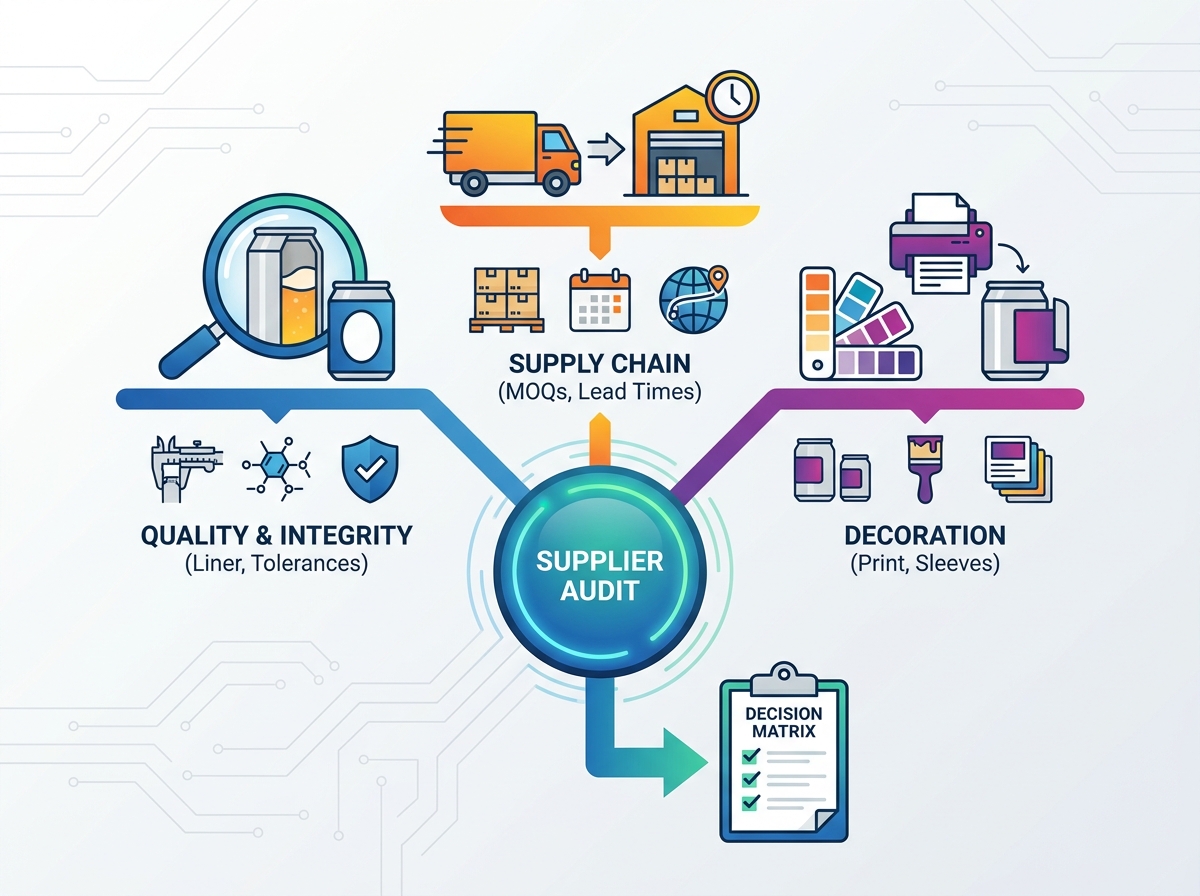
Selecting a packaging partner extends far beyond simply comparing unit costs. A great beverage demands a flawless vessel, yet slight manufacturing inconsistencies can easily ruin a perfect brew. The stakes for getting this choice right are incredibly high. A mismatched beer can supplier introduces massive operational risks to your entire facility. You might quickly face frustrating line jams, compromised seaming mechanics, rapid oxygen ingress, and costly delayed product launches. These failures severely damage brand reputation and disrupt your cash flow. Successful procurement requires thoroughly auditing material integrity, equipment alignment, supply chain resilience, and decoration capabilities. We created this comprehensive guide to provide beverage operations managers and procurement teams with a strict, evidence-based framework. You will learn exactly how to vet manufacturers, verify critical technical specifications, and ultimately shortlist a truly reliable packaging partner.
Key Takeaways
Verify exact dimensional tolerances and lid specifications before committing to avoid canning line incompatibility and false seams.
Evaluate the supplier’s internal liner technology (e.g., BPA-NI) to ensure product flavor stability and regulatory compliance.
Align Minimum Order Quantities (MOQs) and lead times with your facility's warehousing capacity and production forecasting.
Request hard data on aluminum can certifications and material traceability to mitigate supply chain risk.
Evaluating Manufacturing Quality and Material Integrity
You must carefully assess the internal liner chemistry of any potential packaging partner. Evaluate their specific use of BPA-NI (Bisphenol A Non-Intent) internal coatings. These advanced epoxy or acrylic liners form a critical barrier. A highly uniform liner prevents metallic off-flavors from contaminating the liquid. It actively protects highly acidic fruit beers and high-ABV stouts from corroding the aluminum shell. Uneven spray applications leave microscopic bare spots. These bare spots lead to rapid flavor degradation and leaking containers on retail shelves.
Next, you must review structural tolerances closely. Scrutinize the technical specifications for axial load resistance and sidewall thickness. Cans must effortlessly withstand immense vertical stacking pressure in regional warehouses. They also need to handle significant internal expansion during tunnel pasteurization. Weak sidewalls will buckle under pressure. This deformation causes catastrophic pallet collapses and massive product loss.
Finally, demand complete transparency regarding compliance documents. You should request up-to-date aluminum can certifications before signing any contract. Require strict documentation proving food-contact safety, such as FDA or EU compliance certificates. ISO 9001 and FSSC 22000 certifications demonstrate a robust quality management system. You should also verify the exact percentage of recycled aluminum content. Verifying this data helps you meet rigorous food safety standards. It also allows you to hit corporate sustainability goals simultaneously.
Best Practices for Quality Audits
Always request the exact liner cure weight specifications.
Perform an accelerated shelf-life test on high-acid liquids.
Verify the expiration dates on all provided compliance certificates.
Can Lid Compatibility and Seaming Tolerances
Matching the can body to specific end types is absolutely non-negotiable. You must ensure flawless can lid compatibility to protect your liquid. Different end profiles like B64, CDL, or SuperEnd require entirely distinct seaming mechanics. If you attempt to force an incompatible lid onto a standard body, you invite disaster. The resulting false seams will immediately compromise the entire production run.
Tooling alignment presents a major operational hazard. Transitioning between manufacturers often forces you to recalibrate your seamer extensively. You might even need to purchase and install new chucks and rolls. Failing to verify this tooling alignment leads to invisible micro-leaks. These leaks cause rapid dissolved oxygen (DO) spikes. High DO levels destroy hop aromas and accelerate staling.
Always implement rigorous testing protocols early in the negotiation phase. We highly recommend requesting detailed technical data sheets (TDS) for both the body and the lid. You must confirm seam thickness, countersink depth, and overlap tolerances. Run a destructive test batch before committing to commercial volumes.
Standard Testing Protocol
Request the formal TDS documents from the manufacturer.
Measure the flange width on several blank samples.
Run a small batch through your seamer at full speed.
Perform a destructive seam teardown to analyze the body hook.
Assessing Portfolio Breadth: Beer Can Sizes and Formats
Consumer preferences shift rapidly in the beverage industry. You must evaluate the manufacturer’s ability to provide multiple beer can sizes from a single manufacturing source. Most craft breweries start heavily reliant on the 12oz standard format. However, you will likely need 16oz tallboys for premium IPAs or 19.2oz stovepipes for convenience store distribution. Sleek and slim variants also dominate the energy drink and hard seltzer markets.
Future-proofing your production pipeline is incredibly vital. You gain massive operational efficiency by consolidating your vendors into one reliable partner. As your brand portfolio naturally expands into RTDs or varying volume formats, a versatile manufacturer becomes an invaluable asset. They streamline your purchasing process and simplify accounts payable.
Changeover complexities can severely cripple your daily output. Standardizing specific neck diameters across different formats minimizes downtime. For example, maintaining a consistent 202 neck diameter across 12oz and 16oz volumes is highly strategic. This consistency saves hours of mechanical adjustment during canning line changeovers. Your operators can keep the line running instead of swapping out heavy seamer parts.
Table: Format Standardization Risks
Format Change
Neck Diameter
Operational Impact
Downtime Risk
12oz Std to 16oz Std
202 to 202
Height adjustment only
Low (15-30 mins)
12oz Std to 12oz Sleek
202 to 200
Full tooling changeover required
High (2-4 hours)
16oz Std to 19.2oz Std
202 to 202
Height and rail adjustments
Medium (45-60 mins)
Decoration Capabilities: Custom Printed Beer Cans vs. Alternatives
Visual appeal directly drives retail sales on crowded shelves. You must carefully analyze the viability of custom printed beer cans for your flagship core brands. Focus heavily on color fidelity and lithography resolution quality. Ask the manufacturer about their maximum color limits and halftone capabilities. Direct printing traditionally requires very high Minimum Order Quantities (MOQs). These high minimums tie up significant working capital.
You should compare printed cans against blank brite cans paired with labels. Shrink sleeves and pressure-sensitive labels offer incredible artwork flexibility. Assess the cost-benefit ratio for your specific business model. Labels work exceptionally well for seasonal releases, taproom exclusives, or smaller batch runs. They keep your initial packaging inventory costs highly manageable.
Evaluate their available curing and finishing options. Tactile finishes like matte, gloss, or spot varnish help your product stand out visually. However, you must ensure their high-heat curing process does not weaken the aluminum structure. Over-baking the metal leads to soft cans. These compromised cans dent easily on the filling line and during transit.
Comparison Chart: Packaging Decoration Methods
Decoration Method
Best Used For
Typical MOQ
Visual Impact
Unit Cost at Scale
Pre-Printed Lithography
Flagship year-round brands
100,000+ units
Seamless, premium feel
Lowest
Shrink Sleeving
Seasonal or regional releases
20,000+ units
Full 360-degree coverage
Moderate
Pressure Sensitive Labels
Small batch taproom exclusives
5,000+ units
Textured, matte options
Highest
Supply Chain Reliability, MOQs, and Lead Times
Production minimums heavily impact your daily cash flow. You must break down how varying Minimum Order Quantities affect your warehouse holding costs. Contrast standard truckload requirements against supplier-managed inventory (SMI) programs. SMI programs allow you to pull stock only as needed. This approach preserves your working capital and frees up valuable floor space.
Assess average lead time volatility closely. Measure the typical turnaround time for an initial artwork setup versus a simple recurring order. Determine the vendor's historical on-time delivery rate by asking for references. Late arrivals force you to halt production entirely. You will miss critical seasonal launch dates if your packaging arrives two weeks late.
Evaluate geographic proximity and local warehousing logistics. Just-in-Time (JIT) delivery capabilities rely heavily on physical distance. Greater geographical distances naturally increase freight costs. Long transit routes also dramatically increase the risk of pallet damage. Dents, scuffs, and collapsed dunnage often occur when trucks navigate rough highways for days.
Common Supply Chain Mistakes
Ignoring the cost of indoor warehouse storage for bulk orders.
Failing to establish a buffer stock for peak summer seasons.
Accepting vague delivery windows instead of firm arrival dates.
How to Audit and Shortlist Your Next Packaging Partner
Always perform rigorous physical sample testing. Define a clear, repeatable process for requesting blank brite cans and compatible ends. You must conduct destructive seam testing on your specific canning line. Do not rely solely on factory specifications or verbal promises. Real-world machine testing exposes hidden alignment issues immediately.
We highly recommend conducting on-site facility audits if possible. Review their internal quality assurance (QA) protocols thoroughly. Look specifically for automated defect detection systems on their manufacturing line. They should utilize high-speed light testing to catch microscopic pinholes. They also need advanced camera inspection systems to verify complete internal liner coverage.
Finally, secure strong contractual protections before issuing a purchase order. Outline essential Service Level Agreement (SLA) clauses clearly. Include strict defect allowances based on Acceptable Quality Level (AQL) standards. Define clear, painless return policies for out-of-spec pallets. Ensure they accept full liability for product spoilage caused directly by packaging failures. You need a partner who confidently stands behind their product.
Conclusion
A successful vendor relationship requires a careful, strategic balance. You must weigh technical compatibility against supply chain reliability, material quality, and decoration flexibility. Never compromise on seaming tolerances or liner chemistry. A tiny microscopic leak ruins your brand's reputation instantly. Prioritize manufacturers offering transparent QA data and flexible inventory solutions. Standardize your neck profiles early to avoid costly equipment changeovers later. Take action today to protect your product. Request a detailed specification sheet from your top candidates. Order a sample testing kit for your production team. Schedule a consultation with a packaging specialist to finalize your specific chuck and roll requirements.
FAQ
Q: What is the standard MOQ for custom printed beer cans?
A: Traditional lithographic printing usually requires an MOQ of one to two truckloads, which equals roughly 150,000 to 200,000 cans per SKU. However, newer digital printing alternatives and specialized craft suppliers offer much lower MOQs. These agile suppliers can often produce batches as small as 50,000 units, making direct printing accessible for growing brands.
Q: How do I know if a new supplier's cans will work with my current seamer?
A: You must match the can's neck diameter and the specific end profile perfectly. Request technical data sheets for the new components. Then, consult your seamer manufacturer to confirm tooling compatibility. Always conduct a physical seam teardown on a small test batch to measure the body hook and overlap before full production.
Q: Do aluminum cans require special storage conditions before filling?
A: Yes, empty brite cans require clean, climate-controlled storage. Keep them in a dry environment to prevent external oxidation. Maintain stable temperatures to avoid condensation forming inside the shells. Always keep the pallets securely wrapped until they reach the depalletizer to prevent dust, debris, and insects from entering the containers.