Packaging affects how people see functional and relaxation beverages. In the canned beverage industry, packaging trends are moving to eco-friendly materials and clear labels. Beverage cans now have new things like self-chilling technology and child-resistant closures. Recent data shows color, design, and sustainability in packaging affect what people buy and which brands they like. People want packaging that helps with health, is easy to use, and gives a better experience. These trends help brands in the canned beverage industry stand out in a fast-growing market.
Key Takeaways
Eco-friendly packaging, like aluminum cans and plant-based materials, helps brands get noticed. It also helps the environment.
Clear health claims and simple labels help people trust the drinks. They also show why functional drinks are good for you.
Convenient features, like resealable cans and small sizes, make drinks easy to use. These features also help cut down on waste.
Smart packaging uses QR codes and sensors to keep drinks safe and fresh. It also helps brands talk to their customers.
Minimalist and calming designs make drinks look healthy and relaxing. These designs help buyers trust the drinks.
Health and Wellness
Functional Benefits
Packaging helps people understand functional beverages. Brands use packaging to show what each drink does. Some drinks help with relaxation, thinking, or immunity. A study found that labels on blueberry drinks made people believe health claims. People thought the drinks could help their eyes. This made them want to buy the drinks more. Clear health claims on packaging set expectations. They help people see the value of healthy drinks. If the packaging color matches the main ingredient, people think the drink is healthier and tastes better. These ideas help brands show their drinks are good for well-being.
Clean Labeling
Clean labeling is very important for shoppers. People want to know what is in their drinks. Data shows most buyers want natural ingredients. They want drinks that taste good and are healthy. Brands list ingredients clearly and use easy words. This helps build trust and loyalty. Gen Z and Millennials care about this a lot. The table below shows what people want in clean labeling for functional drinks:
Consumer Preference Aspect | Details |
"Better-for-You" Attributes | Clean labels, natural/organic ingredients, reduced sugar/calories, vegan/plant-based |
Health-Conscious Demographics | Younger generations focus on health and sustainability |
Packaging Trends | Effective, sustainable, and protective packaging |
Sustainability and Recycling | Eco-friendly materials and recycling insights |
Functional Beverage Drivers | Relaxation, cognitive enhancement, immunity support |
Clean labeling helps functional drinks grow. It meets what people want for health and honesty.
Wellness Cues
Packaging uses wellness cues to connect with people. Brands pick eco-friendly materials to match green values. Designs use green colors and fruit pictures to show health. Labels list ingredients and benefits so buyers know what they get. Smart packaging like QR codes gives fresh info about health. These cues make people feel good from the start. Stores use displays and scarcity cues to help people choose. Packaging that fits a wellness lifestyle makes people loyal. It also makes them buy again.
Tip: Brands can sell more by using packaging that shows wellness, sustainability, and honesty.
Sustainability in Beverage Cans
Recyclability
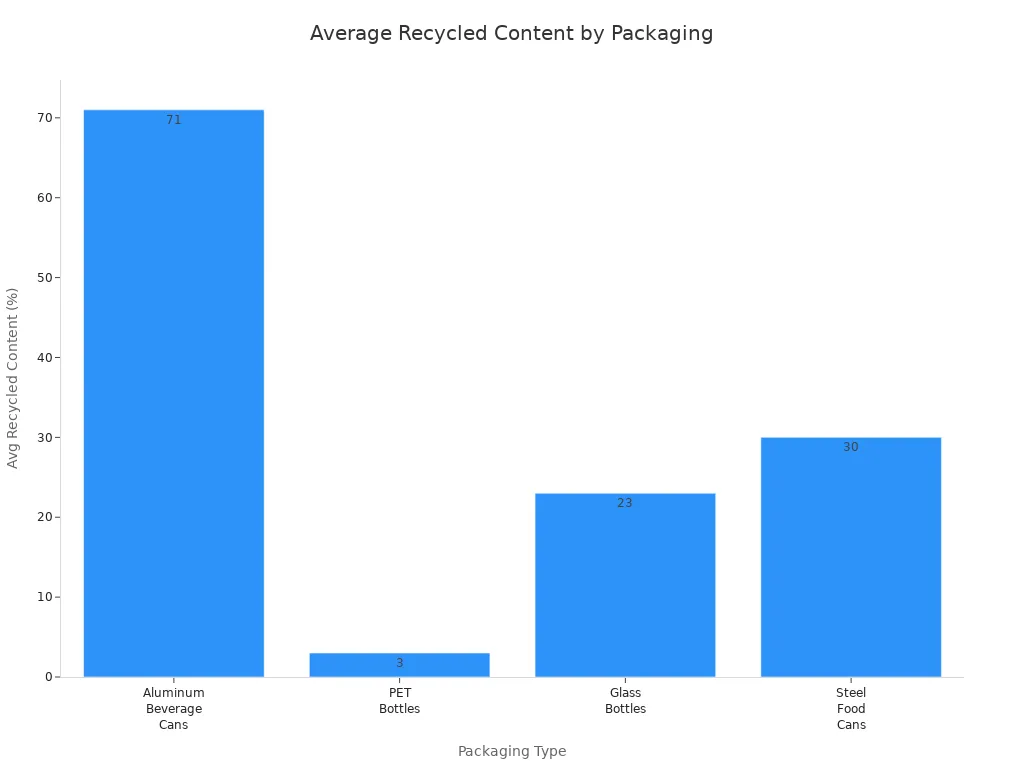
Aluminum beverage cans are great for recycling. They can be recycled over and over again. This keeps them out of landfills. In the United States, 57% of beverage cans get recycled. In Europe, more than 76% are recycled. These numbers are higher than other packaging types. Aluminum cans are better at recycling and circularity. The table below shows how different packaging types compare:
Packaging Type | Recycling Rate (U.S.) | Closed-Loop Circularity Rate | Average Recycled Content (%) |
Aluminum Beverage Cans | 57% | 96.7% | 71% |
PET Bottles | N/A | 34% | 3-10% |
Glass Bottles | N/A | 30-60% | 23% |
Steel Food Cans | 58% | N/A | Up to 30% |
Aluminum cans are worth a lot after use. This makes them popular for recycling programs. They have lots of recycled content. This means less new material is needed. It also lowers the carbon footprint. Aluminum cans are a smart choice for the environment.
![Bar chart comparing average recycled content of aluminum cans, PET bottles, glass bottles, and steel food cans]()
Eco-Friendly Materials
Beverage packaging uses new eco-friendly materials. Brands use plant-based bioplastics and cellulose-based films. They also use lightweight aluminum. These choices help cut landfill waste and lower emissions. Plant-based bioplastics come from things like corn starch and sugarcane. They break down naturally and help stop pollution.
Some companies use glue instead of plastic rings. This change cuts plastic use by 76%. It also lowers carbon emissions. Other brands use paper cartons and recycled materials. These choices help reach eco-friendly goals. The table below shows new ideas and their benefits:
Material Type | Innovation/Example | Environmental Benefits |
Plant-based Bioplastics | Derived from renewable sources like corn starch and sugarcane | Biodegradable, reduces landfill and ocean pollution, lowers reliance on fossil fuels |
Cellulose-based Films | Made from renewable resources | Natural decomposition, reduces synthetic waste, good moisture and oxygen barrier |
Aluminum Cans | Lightweight, recyclable, used widely | High recyclability, reduces transportation emissions, lower carbon footprint than new material production |
Carlsberg Snap Pack | Uses glue instead of plastic rings to bond cans | Cuts plastic use by 76%, reduces plastic waste by over 1,200 tons annually, lowers carbon emissions |
Coca-Cola Plant-based Bottles | Made from sugarcane and corn | Fully recyclable, reduces fossil fuel dependency, supports circular economy |
Paper Boat Tetra Pak | Renewable resource-based cartons | Fully recyclable, minimizes ecological footprint, supports consumer sustainability preferences |
These new ideas help protect the planet. They also give people more eco-friendly packaging choices.
Recycling Education
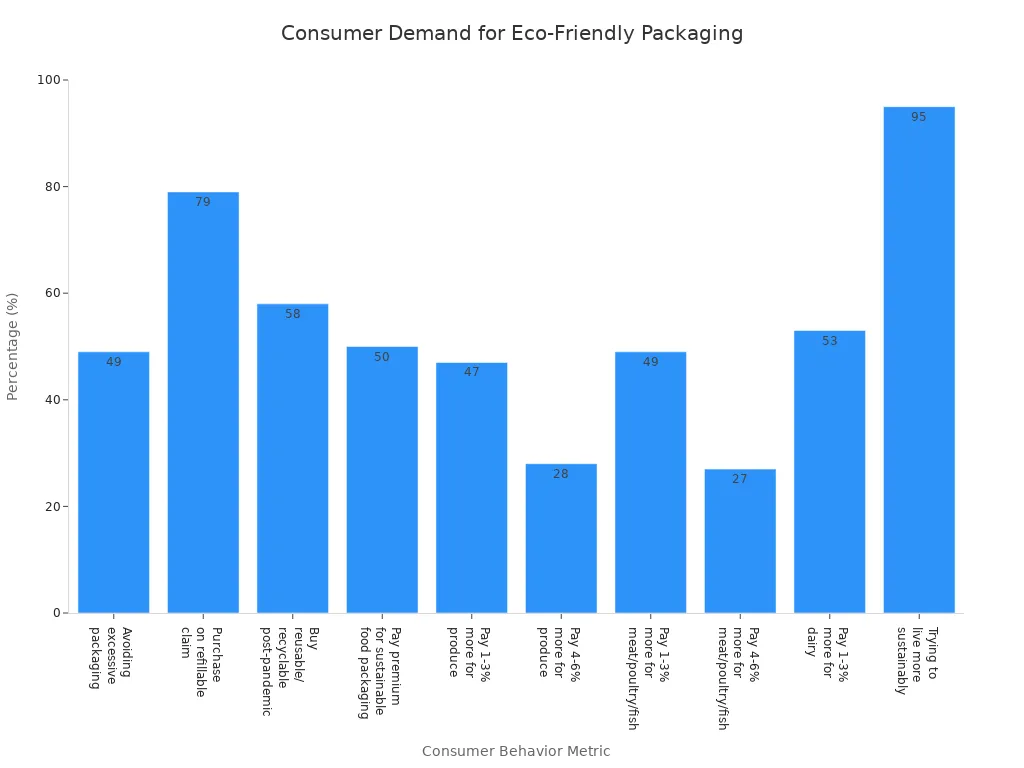
Clear recycling instructions help people recycle better. Many people want to recycle but get confused by labels. Brands use easy recycling symbols and instructions on cans. This helps everyone recycle the right way. Research shows 95% of people try to live greener. After the pandemic, 58% want reusable or recyclable packaging. About half of U.S. shoppers avoid too much packaging. 79% say they would buy products with refillable packaging.
![Bar chart showing consumer demand and willingness to pay for eco-friendly packaging in the beverage industry]()
Note: Simple recycling instructions on beverage packaging help more people recycle. They also help brands earn trust from eco-friendly buyers.
Brands that teach about recycling and use clear labels help the environment. They also help cut waste and make more people pick sustainable cans.
Convenience Trends
Portability
Portability is very important in beverage packaging. Brands make cans light and slim for busy people. Aluminum cans are easy to carry and stack. They also show if someone has opened them. These things help keep drinks fresh and tasty. Smaller cans are getting more popular. Young people like them for portion control and easy use. The table below shows facts about this trend:
Evidence Aspect | Supporting Details |
Rising Consumer Demand | RTD beverages and CSDs make up over 44% of global beverage sales in 2023. |
Market Growth | Aluminum can market is worth $46.8B in 2024 and may reach $73.7B by 2032. |
Portability Features | Cans are light, stack well, show tampering, and keep drinks fresh. |
Smaller Can Formats | Slim cans help with portion control and are easy to carry. |
Innovation | New technology uses less material, making cans lighter. |
These trends show that new packaging helps people drink more often and fits their lives today.
Resealable Solutions
Resealable cans make using drinks easier. Many brands now have cans you can close again or that are child-resistant. These cans let people drink more than once from the same can. Resealable cans also keep drinks safe from germs and tampering. The benefits are:
Easier to use again and store.
Keeps drinks fresh and good.
Less waste because drinks last longer.
Simple to open and close, so it is easy for everyone.
These changes make cans better for daily use and help the planet.
On-the-Go Packs
On-the-go packs have changed how people drink these beverages. People want single-serve packs for their busy days. These packs often have special caps or ways to pour without spilling. More people feel stress and want healthy drinks. Some people also want drinks without alcohol. Packaging that is easy to take with you helps people drink these more often. Brands make packs that stop leaks and keep drinks at the right temperature. They also try to use eco-friendly materials. After COVID-19, more people picked easy and portable drinks. Now, these drinks are part of daily life.
Note: Brands that make new packaging for easy carrying, resealing, and on-the-go use can make customers happier and get them to buy again.
Technology in Beverage Packaging
Interactive Labels
Interactive labels help brands talk to buyers in new ways. Many beverage packages now use smart labels with tiny electronics. These can be sensors, microchips, or RFID tags. These tools help track drinks and check for tampering. They also watch the temperature to keep drinks safe. RFID tags let brands follow drinks as they move to stores. This helps keep products safe and makes recalls faster. Sensors in packaging can check for changes in temperature or air. This helps drinks stay fresh longer. QR codes and barcodes let buyers see what is in the drink. They can also learn how it was made and see any awards. Machine learning helps make labels faster and more correct. These new ideas make packaging smarter and more useful for everyone.
Smart labels use sensors and RFID tags to watch and protect drinks.
QR codes show what is inside, where it came from, and how to recycle.
Digital labels let brands make special designs and small batches.
Smart Features
Smart features help keep drinks safe and fresh for people. Brands like Nestlé and Coca-Cola use QR codes to give more info. These codes can also make buying more fun. Time-temperature indicators show if a drink stayed cold enough. Some freshness signs change color if the drink is not good anymore. This helps stop waste and builds trust with buyers. NFC chips and QR codes can give tips, rewards, or show the drink is real. These smart tools help keep drinks high quality and safe, which is important today.
Freshness signs and TTIs show if drinks are still good.
QR codes and NFC chips give info and rewards.
Anti-tamper seals help stop fake products.
Digital Engagement
Digital engagement is now a big part of drink packaging. Personalized packages, like Coca-Cola’s “Share a Coke,” make buyers feel special. Digital printing lets brands make new designs or messages fast. Connected packaging uses QR codes to link drinks to online content. Buyers can scan codes to get recipes or join rewards programs. They can also share on social media. Brands learn from these scans to make better drinks and ads. These digital tools help brands build trust and make buyers excited.
Tip: Brands that use digital tools in packaging can stand out and make strong bonds with their buyers.
Aesthetics & Storytelling
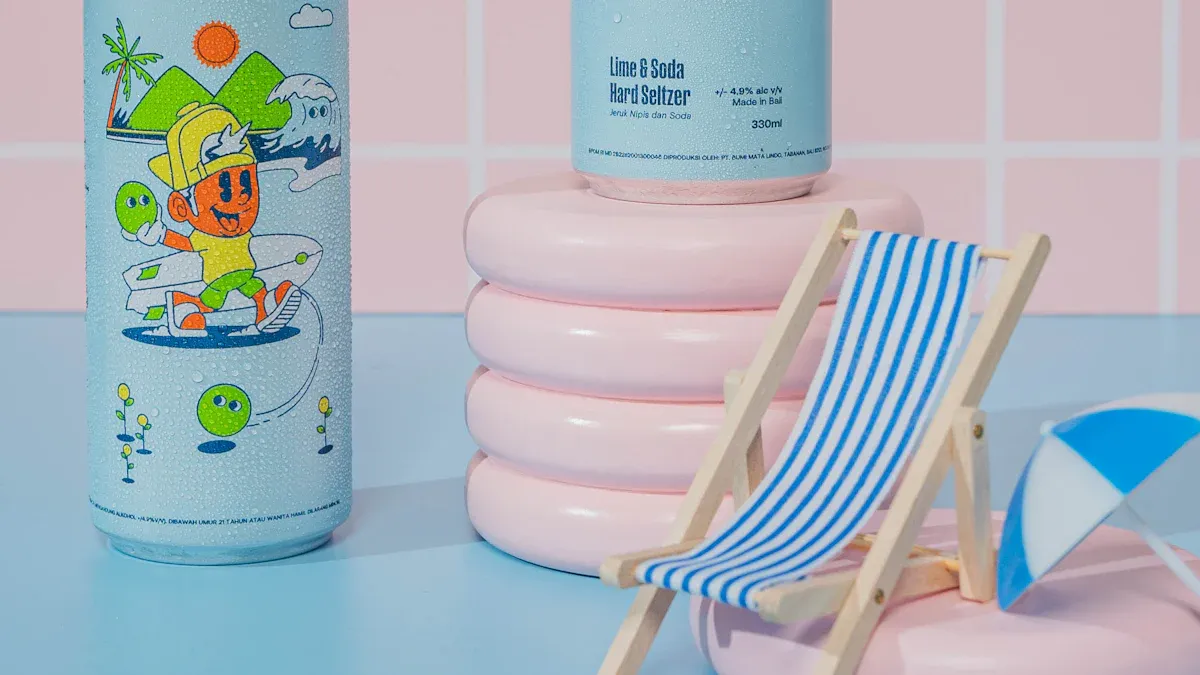
![Aesthetics & Storytelling]()
Minimalist Design
Minimalist design is now very popular for beverage packaging. Many brands use simple shapes and only a few colors. This style can make drinks look fancy or special. A study looked at 1,300 drink packages in a big U.S. store. It found that simple packaging makes people think the drink is better and costs more. But this does not always work for store brands. Sometimes, people think store brands with plain packaging are lower quality. For fancy drinks like spirits, people want more detailed packaging. They think it shows more flavor and richness. Brands need to pick the right materials and fonts. If they do not, their drinks might look boring or cheap. Simple packaging can also make a drink seem more eco-friendly. Many buyers like this today.
Tip: Brands should use simple design that matches their product and who will buy it.
Brand Messaging
Brand messaging on cans helps people trust and like a drink. Good packaging uses color, shape, and clear words to build a brand’s image. This image makes buyers feel good and trust the drink’s quality. Studies show brand image matters more for trust than just knowing the name. When people see a good image and clear value, they want to buy. Eco-friendly signs on packaging also make people trust and want the drink. The table below shows how different parts of brand messaging affect buyers:
Brand Messaging Aspect | Influence on Consumer Trust and Purchase Intent |
Packaging Design (color, shape) | Makes people feel more connected and want to buy. |
Sustainability Cues | Makes buyers feel good about green choices and want to buy. |
Brand Image | Builds trust and helps people decide to buy. |
Design-driven Attributes | Adds value and makes people like the drink more. |
Sensory Experience | Makes people feel good, but does not always mean they will buy. |
Packaging's Role | Gets 64% of new product sales, more than ads. |
Limited Editions
Limited edition packaging makes people excited about these drinks. Brands sometimes sell special cans or bottles for a short time. For example, ITO EN Ltd. made a special Oi Ocha bottle with Shohei Ohtani. These packages can get collectors and fans interested. There is no clear proof that these boost sales a lot. But experts say they help brands stand out. Limited editions often show off new flavors, team-ups, or events. They give people a reason to try and share something new.
Note: Limited edition packaging helps brands get attention and meet new buyers, even if it is hard to know how much it helps sales.
Relaxation Beverages Packaging
Calming Visuals
Designers use calming visuals to make these drinks stand out. They pick simple layouts that look clean and honest. Earth colors and nature-inspired shades make people feel relaxed. Soft, rounded fonts look friendly and natural. Lots of space and neat letters help keep things calm. Simple icons and pictures of real ingredients show wellness. Labels with mostly white look clean and simple, which helps people feel relaxed.
Cool colors like blue, green, and purple help people feel calm. These colors are linked to health, wellness, and relaxation.
Green is good for eco-friendly drinks because it stands for nature and caring for the planet.
Neutral colors like white give a modern and relaxed feeling.
These design choices help people feel comfortable when picking relaxation drinks.
Differentiation
Brands use special packaging to make their drinks different from others. They pick new packaging that shows calmness. Special bottle shapes and soft colors make people think of relaxing. Labels show the drink helps you feel better and invite you to relax. The brand’s story and focus on natural, calming ingredients help people feel connected. Using eco-friendly packaging attracts buyers who care about the planet.
Differentiation Strategy | Impact on Relaxation Beverages |
Unique bottle shapes | Make drinks look calm and different |
Calming color palettes | Help people feel relaxed and healthy |
Mood-focused labels | Invite people to relax |
Story-driven branding | Make people feel connected |
Sustainable packaging practices | Bring in buyers who care about nature |
These ideas match what people want and need, so relaxation drinks stand out in stores.
Category Crossover
Category crossover packaging helps these drinks reach more people. Bottles that look like liquor make the drinks seem fancy and special. Brands like Aplós use bottles that look like expensive cognac. This makes the drinks feel more grown-up and not just like juice. More young people who do not drink alcohol are trying these drinks. This shows the idea is working. When these drinks show up at big events like BevNET, it proves they are getting popular and accepted.
Tip: Fancy packaging and helpful features are important for these drinks to do well for a long time.
Experts agree that using crossover packaging helps these drinks grow and makes adults trust them more.
Canned Beverage Industry Insights
Market Growth
The canned beverage industry is growing very fast. In 2023, relaxation beverages made about $459 million worldwide. Experts think this could reach almost $1.4 billion by 2031. The growth rate is strong at 15.3% each year. More people now know about stress and want to feel better. Many drinks have calming ingredients like adaptogens, magnesium, and ashwagandha. These help people handle stress in busy lives.
In the United States, functional beverages are also selling more. The market was worth $50 billion in 2022. It may grow to $62 billion by 2027. Energy drinks and sports drinks are the most popular. Sports drinks are growing faster every year. By 2030, the global functional beverages market could be $174.12 billion. The Asia-Pacific area is growing the fastest at 6.2%. People there like natural and plant-based ingredients. They choose things like turmeric, ginger, and matcha. The canned beverage industry is doing well because people want healthy and easy options.
Note: Brands that focus on wellness and new packaging can get more buyers as demand grows.
Consumer Trends
Consumers change what happens in the canned beverage industry. Some trends are easy to see:
People want healthy drinks with special ingredients for their health.
Generation Z and Millennials want drinks that help them relax and lower stress.
Older adults care about their stomach, bones, and staying healthy as they age.
Popular claims are energy, alertness, immunity, brain health, and less sugar.
Ingredients like plant-based proteins, vitamins, natural caffeine, and adaptogens such as L-theanine and lion’s mane are wanted.
New flavors are popular, like pineapple, ginger, and watermelon.
Limited edition flavors get people excited and help sell more.
More functional drinks are coming out in Europe, Asia, and North America.
Drinks that help with hydration and relaxation are selling well.
The canned beverage industry makes new products and changes packaging to match these trends. Brands that listen to what people want and give health and convenience will keep doing well.
Packaging changes how people think about functional and relaxation drinks. Brands care more about the environment, smart features, and simple designs. Many companies pick biodegradable materials and use interactive labels. They also make smaller cans so drinks are easier to carry. Simple packaging, like Coca-Cola’s Simple Truth, helps people trust the drink and see its good points. Brands should try new can technology and digital tools. In the future, packaging will focus on being eco-friendly, using digital ideas, and making creative designs that connect with people.
FAQ
What makes aluminum cans a sustainable choice for beverages?
Aluminum cans are easy to recycle and stay strong after many uses. Most recycling places take them. Brands pick aluminum because it cuts down on waste. It also helps make a system where cans get used again and again.
How do interactive labels improve the consumer experience?
Interactive labels have QR codes or smart tags. These let buyers learn more about what is in the drink. They can see health facts or how to recycle. Brands use these labels to talk to buyers online.
Why do brands use minimalist designs on beverage cans?
Minimalist designs help drinks look neat and new. People often trust cans that look simple. Brands use less color and clear writing to show health and wellness.
What are resealable cans, and why are they popular?
Resealable cans let you close the can after you open it. This keeps the drink fresh and safe to drink later. Many people like these cans because they are easy to use and make less waste.
How do calming visuals help relaxation beverages stand out?
Designers use soft colors, easy-to-read fonts, and pictures from nature. These looks make drinks seem calm and nice. Calming packaging brings in buyers who want to feel less stress.